RC Book vs Smart Card RC: Is the Old Book Still Valid?
An old RC book is not invalid just for being a booklet. How it differs from a smart card RC, when a DigiLocker e-RC counts, and the transfer steps.

Co-Founder & CEO
Gaurav brings strategic leadership and business development expertise, with a focus on growth and partnerships. He shapes vindecode.pro around the questions buyers and owners actually ask about VINs, RC checks and manufacturing dates, and drives the goal of making it the most trusted free VIN decoder for India and the US.
An RC book and a smart card RC both point to the same thing: the vehicle’s registration record. For a buyer, the format is secondary. What matters is whether the details, registered owner, chassis and engine numbers, and finance endorsements match the vehicle and the official record.
Run the official RC check before you pay a token, and use the VIN decoder while inspecting the chassis stamp. A neat PVC card does not make a bad record safe, and an older paper booklet does not by itself make a vehicle suspect.
RC Book vs Smart Card: The Practical Difference
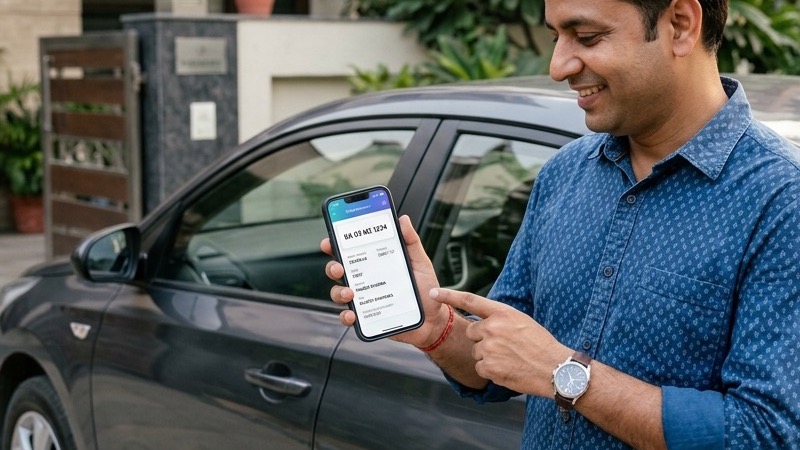
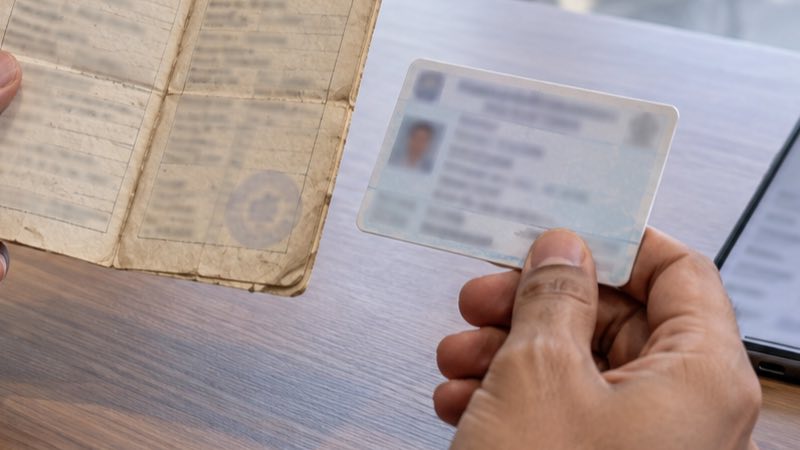
An RC book is usually an older paper booklet or paper certificate carrying the registration particulars and endorsements. A smart card RC is a card-format certificate issued through the transport authority’s process. The physical appearance, printing and security features can vary by state and by when the document was issued, so avoid rules of thumb based on colour, a chip window or a QR-code design.
The better question at a vehicle viewing is: does this document identify this exact vehicle, and can the recorded owner complete a valid transfer? If the answer is yes, the document format is manageable. If the chassis number or hypothecation entry is wrong, a smart card changes nothing.
Use the VAHAN Parivahan RC portal guide to compare basic record details before inspecting documents. The public result is a starting point; original or issued records and physical identifiers decide whether the deal should proceed.
Compare the Formats Before You Buy
Neither format should win a used-car deal on looks alone. This table gives the practical distinction.
| Check | Paper RC book | Smart card RC | Buyer action |
|---|---|---|---|
| Physical form | Booklet, folded certificate or legacy paper record. | Card-format certificate. | Look for damage, overwriting, odd lamination or a replacement-looking document in either case. |
| What you read | Registration particulars and any printed or stamped endorsements. | Registration particulars in a compact card format; printed layout varies. | Compare registration number, maker/model, fuel, owner, full chassis and engine fields. |
| Proof at a viewing | Original document with the recorded owner present. | Original card with the recorded owner present. | Do not accept a cropped WhatsApp image as either one. |
| Online cross-check | Use the registration number in Know Your Vehicle Details. | Use the same registration-number lookup. | A public result is not ownership-transfer proof. |
| If damaged or missing | The registered owner can pursue the duplicate-RC route. | The registered owner can pursue the duplicate-RC route. | Pause the sale until the owner gives you the issued replacement and transfer trail. |
The central fee schedule says an additional ₹200 applies where a smart-card type RC is issued or renewed in Form 23A. That is not a universal “conversion price.” A duplicate, transfer, address change, tax issue, pending fine or state-specific requirement can change what is payable. Use the live VAHAN payment screen and your registering RTO’s instructions rather than an old social-media price list.
At a dealer desk, do a two-minute paper-versus-vehicle test before discussing an upgrade. Read the vehicle number, maker/model and fuel entry aloud from the RC; inspect the same facts on the car; then move to the complete chassis and engine fields. Finally, look for a financier or other endorsement. This small sequence catches the problems that matter in a purchase, while a debate about card versus booklet usually does not.
If the paper document has handwriting, compare it especially carefully with the public record and the owner’s issued digital RC. Endorsements made during transfer, address change or hypothecation termination should be traceable through the RTO record. Do not erase, laminate over or write on an original RC in an attempt to make it look newer.
What Matters More Than the Format
Check the particulars first. A convincing document design is easy to photograph; a consistent set of physical and official records is much harder to fake.
- Recorded owner: ask the person selling the vehicle to show ID matching the RC name. If a dealer or relative is handling the sale, insist that the recorded owner joins the transfer process.
- Chassis and engine numbers: compare the full RC entries with the physical stamping. A public lookup may mask part of the number, so it cannot replace the original document check. See the RC check by chassis number guide for safe inspection steps.
- Maker, model, fuel and class: compare them with the vehicle, insurance and the official plate lookup. “Diesel on record but petrol in front of you” is a stop sign, not a typo to sort out later.
- Hypothecation and other endorsements: a lender note needs resolution before you make final payment. Ask for the financier’s clearance and the appropriate termination paperwork, then confirm the RC record reflects the change.
- Registration status: use the plate to check the basic record, and ask for current insurance, PUCC and, where relevant, fitness or permit evidence. The step-by-step RC status guide explains this buyer workflow.
Photograph the chassis stamp and document particulars only with the owner’s permission. Examine surrounding metal too. Uneven stamp depth, fresh paint, grinding or welding nearby needs a documented explanation and authority review before purchase.
Lost, Damaged, Transfer or Smart-Card Request
The registered owner, not a prospective buyer, should solve a lost or damaged RC before the vehicle changes hands. Parivahan’s Duplicate RC instructions say to open VAHAN, enter the Vehicle Registration Number, choose Basic Services, enter the Last 5 Digit of chassis No, validate the registration/chassis combination, generate an OTP, then choose Duplicate RC. The application may move to the RTO for further processing depending on the service configuration.
Form 26 is the official duplicate-certificate application. It asks the owner to explain whether the original was lost, destroyed, soiled, torn or mutilated, and includes a declaration regarding the registration status. The official duplicate-RC guidance also refers to police reporting and written intimation to the registering authority when an RC is lost or destroyed. Do not accept “the duplicate is in process” as a substitute for a completed record and a traceable sale.
For a normal sale, Parivahan’s transfer guidance refers to Form 29 and Form 30, along with the RC, insurance and other documents that can vary by state or situation. It also lists chassis and engine pencil print among documents that may be required. Keep the seller involved until the transfer application is submitted and retain the acknowledgement.
If you simply prefer a card-format RC, first check the live VAHAN service menu and your RTO’s available services. Do not surrender an original RC or pay an agent before you know whether the local authority treats the request as a duplicate, renewal, address-change or another service.
DigiLocker and mParivahan Electronic RC
An RC pulled into DigiLocker or mParivahan is different from a photograph stored on a phone. MoRTH’s 2018 advisory says that RC records available in electronic form through those platforms are legally recognised at par with the original documents. It also explains that enforcement can validate the relevant electronic information.
For a buyer, that makes an issued digital RC a useful additional check. Ask the owner to open it from their own account and compare its vehicle particulars with the physical vehicle. Do not ask for their OTP, login or an exported PDF. A gallery image, edited scan or forwarded screenshot has none of the assurance of a document pulled through the official platform.
Digital availability does not finish a sale. You still need the recorded owner, matching chassis and engine numbers, clear finance status and a transfer application. The DigiLocker RC guide covers the owner’s retrieval steps; the buyer’s job is to compare, document and wait for the official transfer trail.
The format is the easy part. Buy only when the book, card or electronic RC tells the same story as the vehicle, the official lookup and the person who is selling it.
Frequently asked questions
Is a paper RC book invalid just because it is old?
The key question is whether the registration record and its particulars remain current. Do not reject a vehicle only for having a booklet, but verify the original document, RC status and every important endorsement with the registering authority if necessary.
Is DigiLocker RC valid during a roadside check?
MoRTH states that RC records pulled into DigiLocker or mParivahan in electronic form are legally recognised at par with the original documents. A screenshot or a seller-uploaded image is not the same as an issued record.
What is the official fee for a smart-card RC?
The central fee schedule states an additional ₹200 where a smart-card type RC is issued or renewed in Form 23A. Other service fees and state requirements depend on the transaction, so review the live VAHAN fee panel before payment.
Can a buyer apply for a duplicate RC before purchasing a car?
A duplicate RC is an owner-facing process. The recorded owner should apply through VAHAN/RTO, then complete ownership transfer with the buyer using the required documents and forms.
Sources & official references
- MoRTH advisory: Acceptance of RC in DigiLocker and mParivahanmorth.nic.in
Official recognition of RC records pulled into DigiLocker and mParivahan in electronic form.
- Parivahan: Duplicate RC instructionsstaging.parivahan.gov.in
Official VAHAN steps for Duplicate RC, including the last five chassis digits and OTP.
- Parivahan Form 26parivahan.gov.in
Official application form for a duplicate registration certificate.
- Parivahan: Transfer of Ownershipmparivahan.parivahan.gov.in
Official ownership-transfer guidance and documentation.
- Central Motor Vehicles Rules fee schedulestaging.parivahan.gov.in
Official fee schedule note on an additional ₹200 for a smart-card type RC issued or renewed in Form 23A.