Toyota VIN Decoder: Number Breakdown by Position
Toyota VIN decoder guide: what each of the 17 characters means, Toyota and Lexus WMIs, engine codes for Camry, RAV4, Tacoma and Tundra, and US plant codes.

Co-Founder & CEO
Gaurav brings strategic leadership and business development expertise, with a focus on growth and partnerships. He shapes vindecode.pro around the questions buyers and owners actually ask about VINs, RC checks and manufacturing dates, and drives the goal of making it the most trusted free VIN decoder for India and the US.
A Toyota VIN decoder reads the 17 characters on your Toyota or Lexus and returns where it was built, the model, the engine, the model year and the plant. The quickest way to get that is to enter the VIN in our free VIN decoder, which pulls Toyota's own VIN filings from NHTSA's database.
This guide explains what each position means on a Toyota, so you can sanity-check a listing or a title without any tool at all. One thing surprises most people: on the Toyota models we checked, the engine is coded in the 5th character, not the 8th position that Ford and GM use.
Every code below comes from NHTSA's vPIC database, which we queried in October 2026 by building check-digit-valid sample VINs for each model and decoding them. The sample VINs in this guide are illustrations, not real vehicles.
Toyota VIN breakdown at a glance
Take the sample VIN 4T1GZ1AK3LU100001. vPIC decodes it cleanly as a 2020 Camry SE with the 3.5L V6, built in Georgetown, Kentucky.
| Position | Sample | What it means on a Toyota |
|---|---|---|
| 1–3 | 4T1 | World manufacturer identifier (WMI): Toyota Motor Manufacturing, Kentucky, passenger car |
| 4 | G | Grade or series (G = SE) |
| 5 | Z | Engine (here, the 3.5L V6) |
| 6–7 | 1A | Other attributes such as body and restraint systems |
| 8 | K | Model line (K = Camry) |
| 9 | 3 | Check digit |
| 10 | L | Model year (L = 2020) |
| 11 | U | Assembly plant (U = Georgetown, Kentucky) |
| 12–17 | 100001 | Production sequence number |
The layout follows the federal VIN rule, 49 CFR 565.15. It requires positions 4–8 to describe the make, line, series, body type, engine type and restraint devices on a passenger car, but it lets each manufacturer choose which character holds which attribute. That is why Toyota's layout differs from Ford's. For the general rules that apply to every brand, see our guide on how to read a VIN.
Positions 1–3: Toyota and Lexus WMI codes
The first three characters are the world manufacturer identifier. The first character is the country, so a quick glance tells you whether the vehicle came from the US (4, 5 or 7), Canada (2), Mexico (3) or Japan (J).
These are the main WMIs that NHTSA's vPIC lists for Toyota and Lexus vehicles sold in the US:
| WMI | Make | Manufacturer in vPIC | Vehicle type |
|---|---|---|---|
4T1 | Toyota | Toyota Motor Manufacturing, Kentucky | Passenger car |
4T3 | Toyota | Toyota Motor Manufacturing, Kentucky | MPV (SUV) |
58A | Lexus | Toyota Motor Manufacturing, Kentucky | Passenger car |
5TD | Toyota, Lexus | Toyota Motor Manufacturing, Indiana | MPV (SUV, minivan) |
5TB | Toyota | Toyota Motor Manufacturing, Indiana | Truck |
5TF | Toyota | Toyota Motor Manufacturing, Texas | Truck |
7SV | Toyota | Toyota Motor Manufacturing, Texas | MPV |
5YF | Toyota | Toyota Motor Manufacturing, Mississippi | Passenger car |
7MU | Toyota | Mazda Toyota Manufacturing, USA | MPV |
2T1 | Toyota | Toyota Motor Manufacturing Canada | Passenger car |
2T3 | Toyota | Toyota Motor Manufacturing Canada | MPV |
2T2 | Lexus | Toyota Motor Manufacturing Canada | MPV |
3TM | Toyota | Toyota Motor Mfg de Baja California (Mexico) | Truck |
3TY | Toyota | Toyota Motor Manufacturing de Guanajuato (Mexico) | Truck |
JTD, JTN, JT2 | Toyota | Toyota Motor Corporation (Japan) | Passenger car |
JTE, JTM, JT3 | Toyota | Toyota Motor Corporation (Japan) | MPV |
JT4 | Toyota | Toyota Motor Corporation (Japan) | Truck |
JTH | Lexus | Toyota Motor Corporation (Japan) | Passenger car |
JTJ | Lexus | Toyota Motor Corporation (Japan) | MPV |
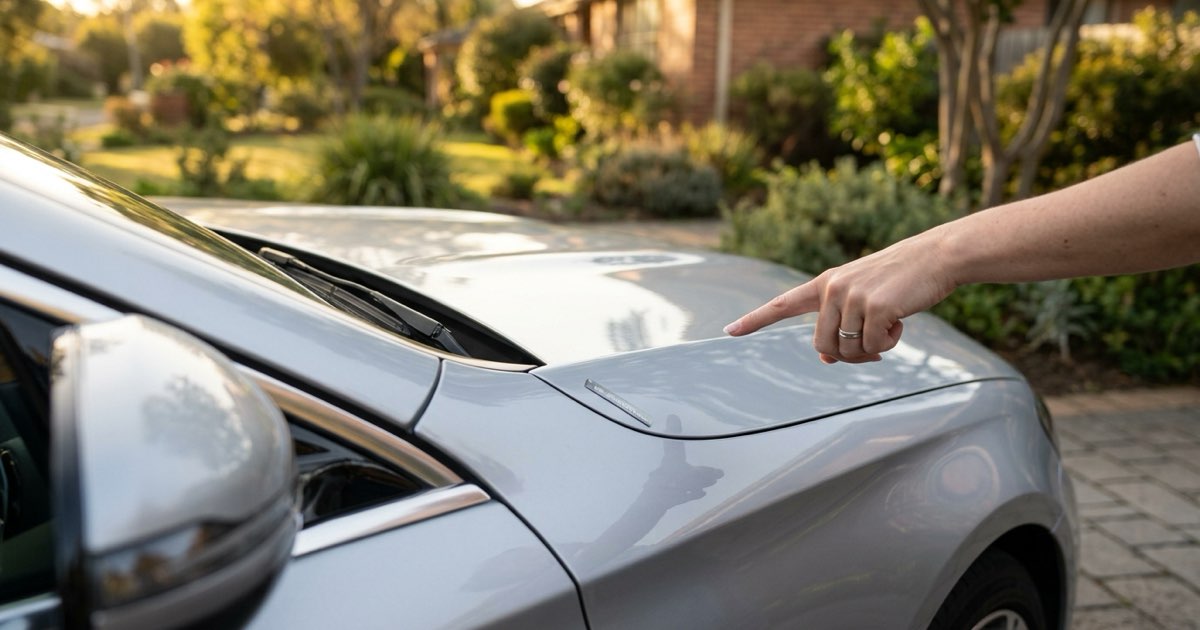
vPIC also lists some shared codes: JTE covers Toyota, Lexus and Subaru, and JTM covers Toyota and Subaru, so the rest of the VIN decides the make. If you are not sure where the VIN plate is on your model, our VIN location guide shows every common spot, from the windshield to the door jamb.
Positions 4–8: how Toyota uses the descriptor section
Positions 4 through 8 are the vehicle descriptor section. On the Toyota models we decoded, they break down like this:
- 4th character: grade or series. On a 2020 Camry, vPIC returns L for
A, LE forC, XLE forF, SE forGand XSE forK. Not every code maps to a named grade in vPIC. - 5th character: engine. This is the one to check when a listing claims a V6 or a hybrid. Details are in the next section.
- 6th and 7th characters: other attributes such as body style and restraint systems. vPIC did not change the decoded engine or model when we varied these on the 2020 Camry.
- 8th character: model line. On the 2020 Camry pattern,
Kdecodes as Camry and swapping it toBdecodes as Avalon. On other models we checked,Eis Corolla,Vis RAV4,Nis the 2020 Tacoma,His Highlander andCis Sienna.
Toyota does not use the 8th character for the engine. If you have read a Ford or Chevy guide that says "check the 8th digit," that advice does not carry over to a Toyota.
Toyota engine codes by VIN for popular models
These are the 5th-character engine codes vPIC returned for the model years shown. We list only engines Toyota sold in each model. Codes can change between generations, so always pair the 5th character with the model year in position 10.
| Model and year | 5th character | Engine (vPIC engine model) |
|---|---|---|
| Camry 2012 | F | 2.5L four-cylinder (2AR-FE) |
| Camry 2012 | K | 3.5L V6 (2GR-FE) |
| Camry 2012 | D | 2.5L hybrid (2AR-FXE) |
| Camry 2020 | 1 or 6 | 2.5L four-cylinder (A25A-FKS) |
| Camry 2020 | 3 | 2.5L hybrid (A25A-FXS) |
| Camry 2020 | Z | 3.5L V6 (2GR-FKS) |
| Corolla 2020 | P | 1.8L four-cylinder (2ZR-FAE) |
| Corolla 2020 and 2023 | 4 | 2.0L four-cylinder (M20A-FKS) |
| RAV4 2020 | 1 | 2.5L four-cylinder (A25A-FKS) |
| RAV4 2020 | 6 or W | 2.5L hybrid |
| Highlander 2020 | Z | 3.5L V6 (2GR-FKS) |
| Highlander 2020 | A or B | 2.5L hybrid (A25A-FXS); vPIC shows a rear motor on B |
| Tacoma 2020 | X | 2.7L four-cylinder (2TR-FE) |
| Tacoma 2020 | Z | 3.5L V6 (2GR-FKS) |
| Tundra 2020 | Y | 5.7L V8 (3UR-FE) |
| Tundra 2024 | A | 3.4L V6 (V35A-FTS) |
A few patterns stand out. Z meant the 3.5L V6 on the 2020 Camry, Highlander and Tacoma alike. The Camry changed codes between generations: the V6 was K in 2012 and Z in 2020. For the 2025 Camry, every sample we built decoded as a 2.5L hybrid, which matches its hybrid-only lineup. The 2024 Tacoma, built in Mexico under the 3TY WMI, decoded as a 2.4L turbo four-cylinder (T24A-FTS) across several 5th-character codes, so the VIN alone did not separate its versions in our test.
We cross-checked most, not all, of these codes against more than one sample pattern. For a specific vehicle, decode the full VIN rather than relying on a single character. If you want the full spec sheet, including drive type, body class and engine details, our guide to car specs by VIN covers what a decoder returns.
Positions 9–17: check digit, year and plant
Position 9 is the check digit. It is calculated from the other 16 characters, so a single typo in a listing or a title usually makes the VIN fail the check. Our VIN check digit guide shows the math.
Position 10 is the model year. In the samples above, C is 2012, L is 2020, N is 2022, P is 2023, R is 2024 and S is 2025. The full list is in our VIN year chart.
Position 11 is the assembly plant. These are the plant codes vPIC returned for Toyota's North American plants:
| 11th character | Plant | Example models we decoded |
|---|---|---|
U | Georgetown, Kentucky | Camry, RAV4 hybrid (2023), Lexus ES (2022) |
S | Princeton, Indiana | Highlander |
X | San Antonio, Texas | Tundra, Tacoma (2020) |
P | Blue Springs, Mississippi | Corolla |
C | Cambridge, Ontario | RAV4 (2020) |
M | Tijuana, Mexico | Tacoma (2020) |
T | Apaseo el Grande, Mexico | Tacoma (2020, 2024) |
Plant letters are tied to the manufacturer, so read them together with the WMI. The same model can come from more than one plant: the table above shows the RAV4 built in both Cambridge, Ontario (C) and Georgetown, Kentucky (U).
Positions 12–17 are the production sequence number. They make each VIN unique but carry no build information you can read on your own.
What a Toyota VIN does not tell you
A VIN identifies the vehicle. It is not a build sheet. These details are missing from a Toyota VIN:
- Exterior and interior color. The paint code is on a separate label, not in the VIN. Our guide to finding a paint code by VIN explains where to look.
- Option packages and accessories. Things like a premium audio package, a tow package or dealer-installed accessories are not encoded. vPIC returns a few package names for some trims, but not a full list. The original Monroney label is the best record; see our guide to getting a window sticker by VIN.
- Accident, title or odometer history. The VIN is the key to those records, but the history lives in state title data and NMVTIS, not in the 17 characters.
- Open recalls. Recalls are tied to the VIN, but you have to look them up. Our guide to checking recalls by VIN walks through NHTSA's free lookup.
- A replaced engine. The 5th character records the engine the vehicle was built with. An engine swap does not change the VIN.
How to decode a Toyota VIN step by step
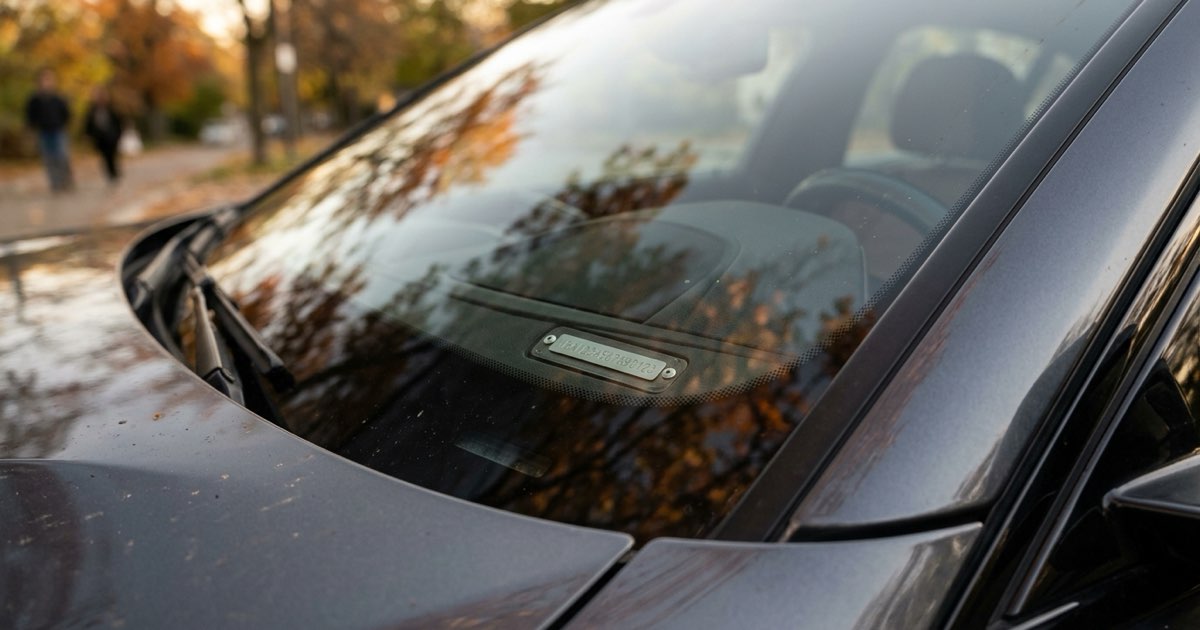
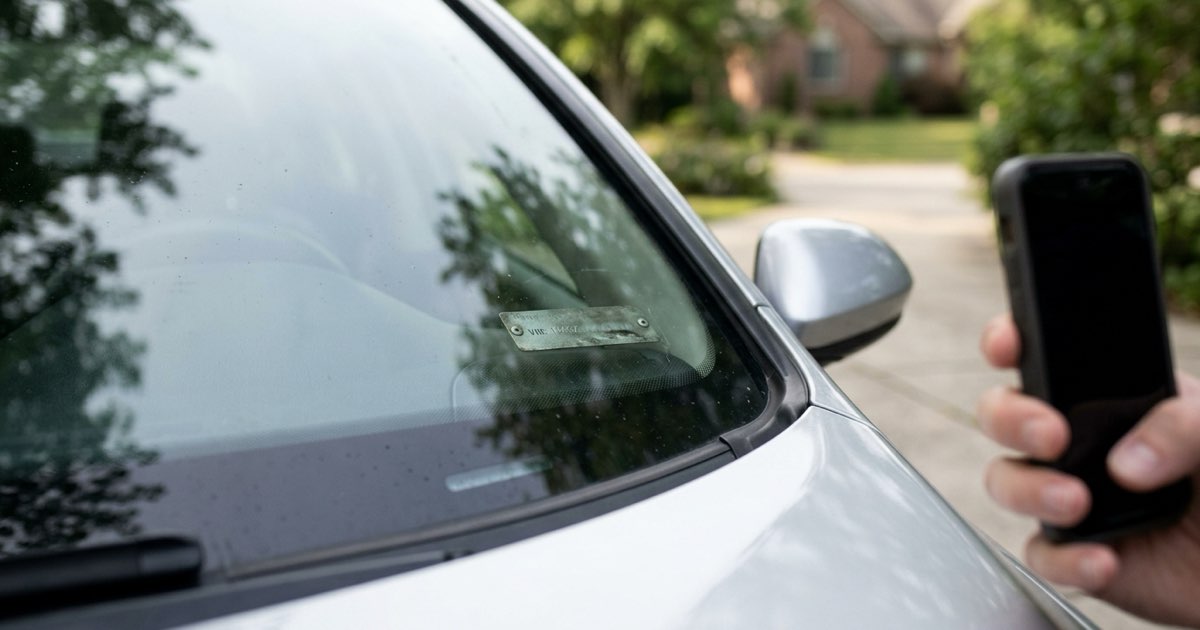
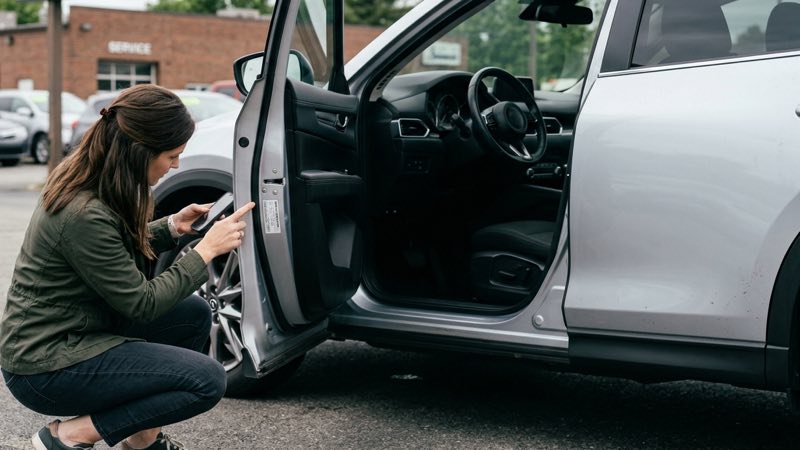
- Read the VIN from the vehicle, not from the ad. Check the windshield plate and the door-jamb label and make sure they match each other and the title.
- Check the first three characters. Match them to the WMI table above. A Camry whose VIN starts with something other than a Toyota WMI is a red flag.
- Look at the 5th character and the model year in position 10, then compare them with the engine table. A "V6 Camry" listing for a 2020 model should show
Z. - Confirm the model line in position 8 and the plant in position 11.
- Run the full VIN through our free VIN decoder. It validates the check digit and returns the model, engine, plant and NHTSA recall campaigns in one step.
- Fill the gaps. Pull the window sticker for options, the paint label for color, and a title history check before you pay.
Frequently asked questions
Which digit of a Toyota VIN is the engine?
On the Toyota models we checked in NHTSA's vPIC database, it is the 5th character. On a 2020 Camry, 1 is the 2.5L four-cylinder, 3 is the 2.5L hybrid and Z is the 3.5L V6. The 8th character is the model line, not the engine.
What does 4T1 mean on a Toyota VIN?
4T1 is the code NHTSA lists for passenger cars from Toyota Motor Manufacturing, Kentucky, the Georgetown plant. Every Camry pattern we decoded, from 2012, 2020 and 2025, started with 4T1.
How can I tell where my Toyota was built?
Read the first character for the country (4, 5 or 7 for the US, 2 for Canada, 3 for Mexico, J for Japan) and the 11th character for the plant. U is Georgetown, Kentucky, S is Princeton, Indiana, X is San Antonio, Texas, and P is Blue Springs, Mississippi.
Does a Toyota VIN show the trim level?
Partly. vPIC returns a grade for some 4th-character codes, such as LE, SE or XLE on a 2020 Camry, but it does not show option packages, color or dealer accessories. The original window sticker lists those.
Do Lexus VINs work the same way?
Yes. Lexus models use their own WMIs, such as JTH and JTJ for Japan-built Lexus cars and SUVs, 2T2 for Lexus SUVs built in Canada and 58A for Lexus cars built in Kentucky, then follow the same 17-character structure.
Sources & official references
- NHTSA vPIC VIN decoding APIvpic.nhtsa.dot.gov
Source of the WMI, engine, model-line and plant codes in this guide, queried in October 2026
- NHTSA vPIC: WMIs registered to Toyotavpic.nhtsa.dot.gov
Full list of Toyota manufacturer codes, with country and vehicle type
- 49 CFR 565.15: VIN content requirements (eCFR)ecfr.gov
Federal rule that defines each VIN section and requires engine type in positions 4–8