How to Read a VIN Number: Digit-by-Digit Chart and Example
How to read a VIN number: a 17-digit chart of every position, the 10th-digit model year table, a worked check digit and a decoded example VIN.

Co-Founder & CEO
Gaurav brings strategic leadership and business development expertise, with a focus on growth and partnerships. He shapes vindecode.pro around the questions buyers and owners actually ask about VINs, RC checks and manufacturing dates, and drives the goal of making it the most trusted free VIN decoder for India and the US.
To read a VIN, split its 17 characters into four sections: positions 1–3 identify the manufacturer and country, positions 4–8 describe the vehicle, position 9 is the check digit, and positions 10–17 give the model year, plant and serial number. The 10th character is the model year and the 11th is the assembly plant, so you can tell when and where a car was built at a glance.
Every position has a job. Once you know the structure, you can also catch most typos without any tool. Jump to the full model year chart if you only need the 10th digit.
The rules come from 49 CFR Part 565, which sets the 17-character VIN format that cars, trucks, motorcycles and trailers built for the US have used since model year 1981. To decode a specific vehicle, paste it into our free VIN decoder. To understand what the result means, read on. Motorcycles and trailers follow the same layout with a few differences, covered in our motorcycle VIN decoder and trailer VIN decoder guides.
The four sections of a VIN
| Positions | Section | What it holds |
|---|---|---|
| 1–3 | World Manufacturer Identifier (WMI) | Country, manufacturer and vehicle type |
| 4–8 | Vehicle Descriptor Section (VDS) | Model, body, restraints and engine |
| 9 | Check digit | Math check on the other 16 characters |
| 10 | Model year | One character per year, on a 30-year cycle |
| 11 | Plant | The factory that built the vehicle |
| 12–17 | Serial number | The production sequence (small makers use 12–14 for their code) |
Two rules apply everywhere: the letters I, O and Q are never used, and a VIN on a 1981-or-newer US vehicle is exactly 17 characters. If you count 16 or 18, you have miscopied it. Older vehicles can have shorter VINs.
How many digits are in a VIN?
A modern VIN has 17 characters, and Part 565 sets rules for which characters can go where. These rules let you spot a miscopied VIN before you decode it:
| Rule in 49 CFR Part 565 | What it means when you read a VIN |
|---|---|
| Characters come from the digits 0–9 and the letters A–Z except I, O and Q | An "O" is a zero and an "I" is a one |
| Every one of the 17 spaces must hold a character | No blanks, dashes or spaces belong in the VIN |
| On cars, SUVs, vans and trucks up to 10,000 lb GVWR, the last five characters (13–17) are numbers | A letter in positions 13–17 on a car means a copying error |
| On other vehicles, such as motorcycles, trailers and heavier trucks, the last four characters (14–17) are numbers | A letter in positions 14–17 means a copying error |
| No two vehicles made within 60 years from the 1980 model year may share a VIN | A VIN points to one vehicle only |
Positions 1–3: country and manufacturer (WMI)
The first three characters are the World Manufacturer Identifier. The first one shows the country the code was assigned to, which is often not the brand's home country (position 11 gives the actual plant):
| First character(s) | Country |
|---|---|
1, 4, 5 | United States |
2 | Canada |
3 | Mexico |
J | Japan |
KL–KR | South Korea |
L | China |
SA–SM | United Kingdom |
W | Germany |
ZA–ZR | Italy |
So a Toyota built in Kentucky starts with 4 or 5, and a Chevrolet built in Mexico starts with 3. The second and third characters identify the manufacturer and, often, the vehicle type. Ford uses 1FT for US-built trucks and 1FA for US-built cars, for example. Our brand guides list the WMIs for Ford, Chevrolet, Subaru, Tesla and Harley-Davidson.
Small manufacturers that build fewer than 1,000 vehicles of a given type a year use a 9 as the third character. Their full manufacturer code then continues in positions 12–14.
Positions 4–8: model, body and engine
The Vehicle Descriptor Section is where manufacturers have the most freedom. Federal rules say what must be encoded, but each manufacturer decides which position holds what. For passenger cars that includes the line, series, body type, engine type and restraint system. For trucks it adds the gross vehicle weight rating class.
In practice:
- Positions 4–7 often encode the model line, series or trim, body style and restraint system; each maker decides the placement within positions 4–8.
- Position 8 is the engine code on most cars and light trucks from US, Japanese and Korean brands. On a 2022 F-150,
5means the 5.0L V8. On a 2022 Silverado 1500,Dmeans the 5.3L V8. Our Ford engine code guide lists the Ford codes.
There is a catch: these characters are only meaningful in context. The same D that means a 5.3L V8 on a Silverado means a hybrid on an F-150. That is why generic "VIN digit charts" often give wrong answers. A decoder that reads the manufacturer's own filing, such as NHTSA's vPIC database used by our tool, avoids the problem.
Position 9: the check digit, with the math
Position 9 is calculated from the other 16 characters, using a formula set by Part 565. If one character is copied wrong, the check digit catches many, but not all, of those errors, which is why decoders can warn you about typos.
How it works:
- Convert each letter to a number: A=1, B=2, C=3, D=4, E=5, F=6, G=7, H=8, J=1, K=2, L=3, M=4, N=5, P=7, R=9, S=2, T=3, U=4, V=5, W=6, X=7, Y=8, Z=9. Digits keep their value.
- Multiply each value by its position weight: 8, 7, 6, 5, 4, 3, 2, 10, 0, 9, 8, 7, 6, 5, 4, 3, 2 (position 9 itself has weight 0).
- Add the 17 products and divide by 11. The remainder is the check digit. A remainder of 10 is written as
X.
Here is the full calculation for the sample VIN 1FTFW1E51NF100001:
| Position | 1 | 2 | 3 | 4 | 5 | 6 | 7 | 8 | 9 | 10 | 11 | 12 | 13 | 14 | 15 | 16 | 17 |
|---|---|---|---|---|---|---|---|---|---|---|---|---|---|---|---|---|---|
| Character | 1 | F | T | F | W | 1 | E | 5 | 1 | N | F | 1 | 0 | 0 | 0 | 0 | 1 |
| Value | 1 | 6 | 3 | 6 | 6 | 1 | 5 | 5 | 1 | 5 | 6 | 1 | 0 | 0 | 0 | 0 | 1 |
| Weight | 8 | 7 | 6 | 5 | 4 | 3 | 2 | 10 | 0 | 9 | 8 | 7 | 6 | 5 | 4 | 3 | 2 |
| Product | 8 | 42 | 18 | 30 | 24 | 3 | 10 | 50 | 0 | 45 | 48 | 7 | 0 | 0 | 0 | 0 | 2 |
The products add up to 287. 287 divided by 11 is 26 with a remainder of 1, and the ninth character is 1, so the VIN is valid. Change one character and the remainder usually changes, though not always: letters with the same assigned value, such as A and J, give the same result.
A valid check digit only proves the VIN is well-formed. It does not prove the VIN belongs to the car in front of you. Our VIN check digit guide works through full examples, including a VIN that ends its check in X.
Position 10: the model year
Position 10 holds one character per model year. This is the full 10th-digit chart, with both 30-year cycles:
| Code | Year (position 7 is a digit) | Year (position 7 is a letter) |
|---|---|---|
A | 1980 | 2010 |
B | 1981 | 2011 |
C | 1982 | 2012 |
D | 1983 | 2013 |
E | 1984 | 2014 |
F | 1985 | 2015 |
G | 1986 | 2016 |
H | 1987 | 2017 |
J | 1988 | 2018 |
K | 1989 | 2019 |
L | 1990 | 2020 |
M | 1991 | 2021 |
N | 1992 | 2022 |
P | 1993 | 2023 |
R | 1994 | 2024 |
S | 1995 | 2025 |
T | 1996 | 2026 |
V | 1997 | 2027 |
W | 1998 | 2028 |
X | 1999 | 2029 |
Y | 2000 | 2030 |
1 | 2001 | 2031 |
2 | 2002 | 2032 |
3 | 2003 | 2033 |
4 | 2004 | 2034 |
5 | 2005 | 2035 |
6 | 2006 | 2036 |
7 | 2007 | 2037 |
8 | 2008 | 2038 |
9 | 2009 | 2039 |
The sequence skips I, O, Q, U, Z and the digit 0, and repeats every 30 years. T meant 1996 and now means 2026. To tell the cycles apart, Part 565 makes position 7 a letter on 2010-and-later cars, SUVs and light trucks, and a digit on 1980–2009 models. That position 7 rule does not apply to motorcycles, trailers or heavier trucks, so on those vehicles use the model and its age to pick the cycle. Our 10th digit of VIN year chart lists every code from 1980 to 2030.
Model year is not the build date. Part 565 defines model year as the year used to designate a vehicle model, regardless of the calendar year it was actually produced in, as long as the production period does not exceed 24 months. A 2026 model can roll off the line in mid-2025. The build month is on the door-jamb label, as our manufacturing date guide explains.
Positions 11–17: plant and serial number
Position 11 is the plant code. Each manufacturer sets its own list, and the same letter means different plants at different brands. F is Dearborn, Michigan, on an F-150, but Fremont, California, on a Tesla.
Positions 12–17 are the production sequence number (for small manufacturers, only 15–17). They make the VIN unique. They do not encode a date, and a lower number only means an earlier build within the same plant and series.
Where to find the VIN to read it
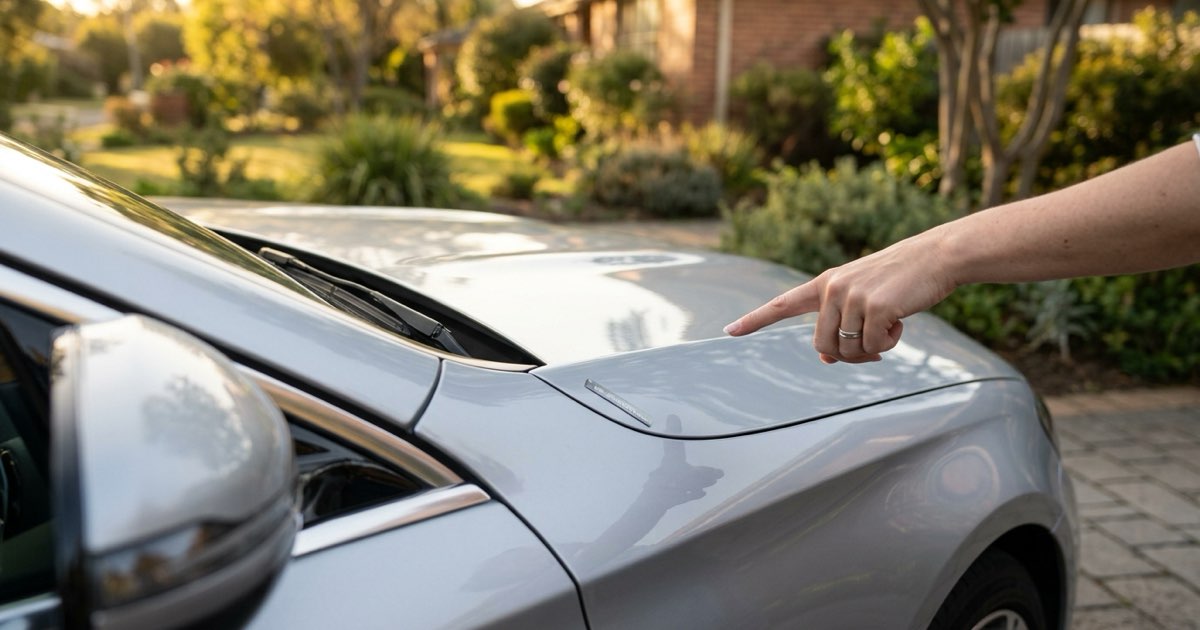
Read the VIN from the vehicle itself, then compare it with the title and any listing. Federal rules put it in two predictable places on most cars and light trucks:
| Location | What the rule says | What else is there |
|---|---|---|
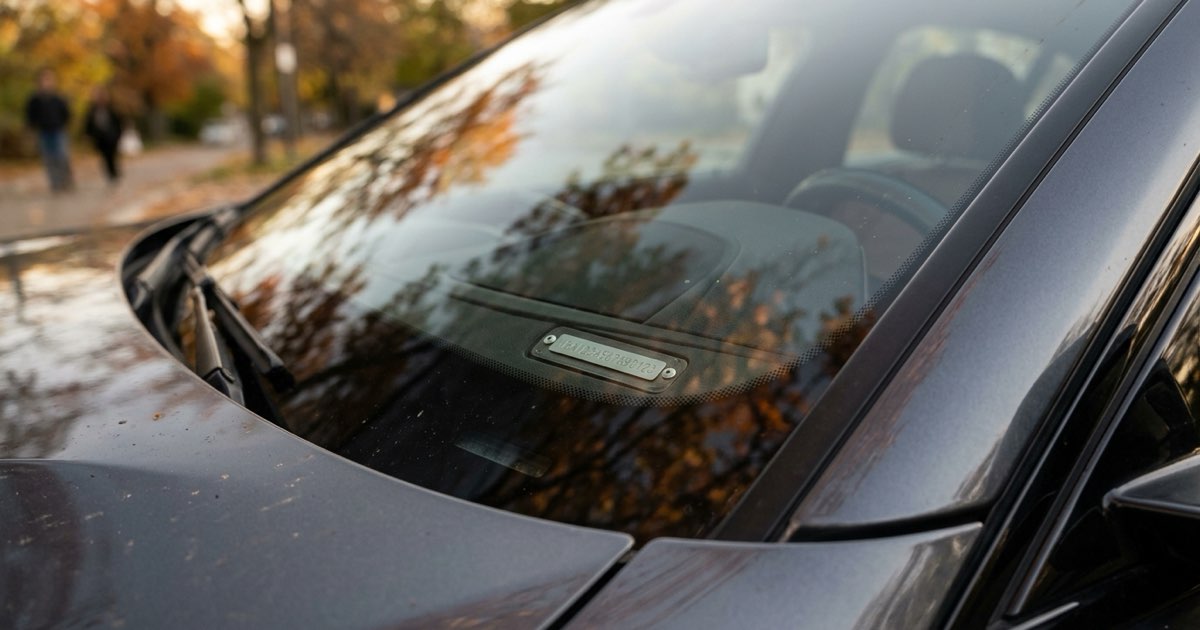
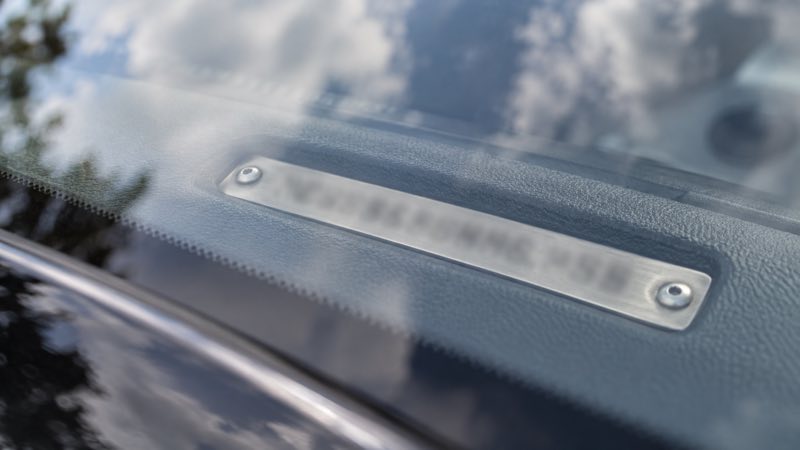
| Dashboard, seen through the windshield | On passenger cars, multipurpose vehicles, low-speed vehicles and trucks up to 4,536 kg (10,000 lb) GVWR, the VIN must be readable from outside, next to the left windshield pillar, in characters at least 4 mm tall (49 CFR 565.13) | The quickest place to read the VIN without opening the car |
| Certification label by the driver's door | Except on trailers and motorcycles, the label goes on the hinge pillar, door-latch post or door edge next to the driver, or on the left of the instrument panel if those are not practicable (49 CFR 567.4) | The VIN and the month and year of manufacture |
Motorcycles, trailers and heavier trucks are not covered by the windshield rule and carry the VIN elsewhere. Our guide to where to find the VIN number covers them by vehicle type.
Worked example: reading a Ford F-150 VIN
Illustrative only: 1FTFW1E51NF100001 is a test VIN we built with a valid check digit, not a known real vehicle. NHTSA's vPIC database decodes it as follows:
| Characters | Position | Meaning |
|---|---|---|
1 | 1 | Built in the United States |
FT | 2–3 | Ford truck |
FW1E | 4–7 | F-150 SuperCrew, 4x4, restraint data |
5 | 8 | 5.0L V8 engine |
1 | 9 | Check digit (valid, see above) |
N | 10 | 2022 model year |
F | 11 | Dearborn Truck Plant, Michigan |
100001 | 12–17 | Production sequence |
Put together: a 2022 Ford F-150 SuperCrew 4x4 with the 5.0L V8, built in Dearborn. If a seller listed that truck as a 2023 or an EcoBoost, the VIN would tell you something is off.
What a VIN does not tell you
- Build date: see the door-jamb label.
- Color and options: paint codes and option packages are not required VIN attributes, so a decode will not reliably show them. Our guides to the paint code by VIN and the window sticker by VIN cover where to find them.
- History: owners, accidents, theft, salvage titles and odometer readings come from state and insurance records. Start with the free NICB VIN check, then a title-based report.
- Open recalls: our decoder lists NHTSA recalls for the make, model and year. For the exact car, use NHTSA's recall lookup.
Not sure where the VIN is on your car? See the VIN locations above or our full guide to where to find the VIN number.
Frequently asked questions
What does the 10th digit of a VIN mean?
The 10th character is the model year. For example, N is 2022, P is 2023, R is 2024, S is 2025 and T is 2026. The codes repeat every 30 years, and position 7 tells the cycles apart on cars and light trucks.
How many digits are in a VIN?
A VIN on a vehicle built for the US from the 1981 model year onward has exactly 17 characters, made up of digits and capital letters other than I, O and Q. Every position must be filled. If you count 16 or 18, a character has been dropped or added while copying.
What do the last 6 digits of a VIN mean?
Positions 12 to 17 are the production sequence number that the manufacturer assigns as vehicles are built. On cars, SUVs and trucks up to 10,000 lb GVWR, the last five characters must be numbers. Small manufacturers that build fewer than 1,000 vehicles of a type a year use positions 12 to 14 for their manufacturer code instead.
What does the first digit of a VIN mean?
It is the first character of the World Manufacturer Identifier and shows the country that code was assigned to, which is often where the vehicle was built. The exact plant is position 11. 1, 4 and 5 mean the United States, 2 is Canada, 3 is Mexico, J is Japan, W is Germany and L is China. For some letters, such as K, S and Z, you need the second character too: KL to KR is South Korea, SA to SM is the United Kingdom and ZA to ZR is Italy.
Which digits in a VIN show the engine?
There is no universal position, but many manufacturers use position 8 for the engine on cars and light trucks, including Ford and GM. The same character can mean different engines in different models and years.
Does the VIN show the build date?
No. The VIN shows the model year, not the month or day of manufacture. The build month and year are printed on the certification label on the driver door jamb.
Why are I, O and Q never used in a VIN?
Federal rules exclude I, O and Q from VINs, so if you think you see an O, it is a zero.
Sources & official references
- 49 CFR Part 565: Vehicle Identification Number requirementsecfr.gov
VIN structure, model year codes, check digit calculation
- NHTSA vPIC VIN decoding APIvpic.nhtsa.dot.gov
Manufacturer VIN filings used for the worked example
- NHTSA Manufacturer Information (Part 565 submittals)vpic.nhtsa.dot.gov
Each manufacturer's published VIN decoding scheme
- 49 CFR 567.4: Certification label requirementsecfr.gov
Door-pillar label location, month and year of manufacture, and VIN on the label