California VIN Verification: REG 31 Form Guide
California VIN verification explained: when the DMV needs a REG 31, who can sign it, how to register an out-of-state car, and free checks before you buy.

Co-Founder & CEO
Gaurav brings strategic leadership and business development expertise, with a focus on growth and partnerships. He shapes vindecode.pro around the questions buyers and owners actually ask about VINs, RC checks and manufacturing dates, and drives the goal of making it the most trusted free VIN decoder for India and the US.
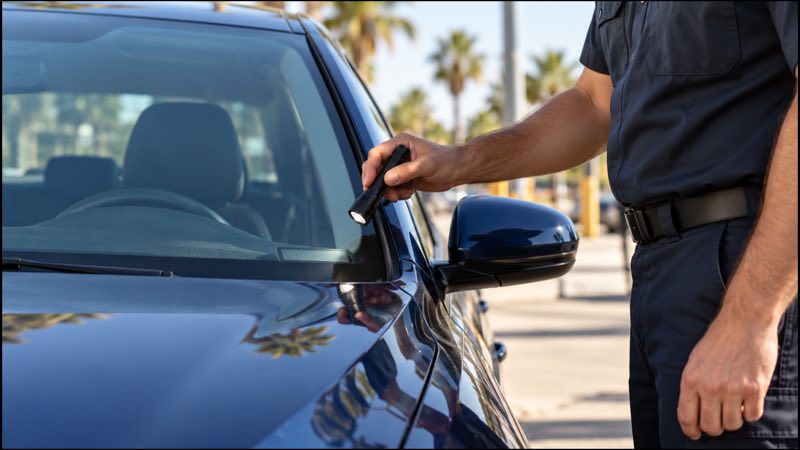
California VIN verification is the physical inspection the DMV records on form REG 31, "Verification of Vehicle," and it is required to register a vehicle that was last registered in another state, apart from narrow DMV exceptions for some new trailers and new commercial vehicles. A DMV employee, a peace officer such as a CHP officer, an authorized auto club employee or a DMV-licensed vehicle verifier reads the VIN and other details from the vehicle itself and signs the form.
The owner cannot fill it in. The top of the form says it plainly: "NOT TO BE COMPLETED BY APPLICANT."
This guide explains when you need a REG 31, who can sign it, how the full out-of-state registration works, and which free checks to run before you buy a car in California. The form details come from the current REG 31 (REV. 5/2025) and the DMV's own registration procedures manual.
What California VIN verification is
A REG 31 is more than a VIN check. The verifier inspects the complete, assembled vehicle and records:
- The VIN, plus where it is located (windshield, door post, frame and so on), how the plate is attached and whether it appears okay, damaged, altered or missing
- The engine number for motorcycles and off-highway vehicles
- Make, model, model year and body type
- Whether the federal certification (safety) label agrees with the VIN
- The odometer reading, with no tenths
- The emission label, which shows whether the vehicle meets US EPA standards only or California standards too
- Which ownership document the VIN was compared to, such as the title or registration card, and whether they agree
The form warns that any missing section, alteration, cross-out or erasure, even if initialed, voids it, and a new verification has to be done. The verifier signs under penalty of perjury that they physically examined the vehicle.
California also uses the REG 31 to check whether an out-of-state car was built to California emission standards. That is a big difference from Florida's HSMV 82042 verification, which focuses on the VIN and odometer.
The REG 31 form, section by section
The form tells the verifier that "all numbered sections (1-9) below must have at least one box checked in each section," and that anything that does not apply must be marked N/A rather than left blank. Knowing what each section asks makes it easier to have the right documents and the vehicle ready.
| Section | What the verifier records | What can go wrong |
|---|---|---|
| Top block | Plates on the vehicle, VIN, engine number (motorcycles and OHVs), make, model, model year, body type code, GVWR and category (automobile, commercial, motorcycle, OHV, trailer) | Wrong body type code, which the form lists on the back |
| 1. VIN location | Where the VIN was read: windshield, door post, engine compartment, firewall, steering column, body or frame | VIN not visible |
| 2. Attached by | Rosette rivets, round rivets, screws, adhesive or stamped | Unusual fasteners on a dash plate are a theft red flag |
| 3. Type | Metal plate, label, or stamped on the body or frame | |
| 4. VIN/engine number condition | Appears okay, illegible or damaged, altered or tampered, missing, or none because newly built. Motorcycles get both the VIN and engine boxes marked | Any starred box means the form goes to the CHP |
| 5. Model year determined from | The 10th digit of the VIN for 1980 and newer, a reference book, or remarks | |
| 6. Federal certification label | Whether the door or frame label agrees with the VIN. Required for 1970 and newer, not for OHVs | Missing, damaged or altered label sends the vehicle to the DMV or CHP |
| 7. Odometer | Mileage exactly as shown, no tenths, miles or kilometers. Not required for OHVs and low-speed vehicles | |
| 8. Ownership document | Which document the VIN was compared to (title, MCO, salvage certificate, registration card) and whether it agrees | A disagreeing VIN needs the owner's statement of facts |
| 9. Emission label | US EPA only, US EPA and California, California only, California OHV or dual-sport | A 49-state car under 7,500 miles may not be registrable |
Section 9 is the one that surprises people. The label is under the hood on most cars, and the verifier records what it says. The form requires it for vehicles from model year 1968 on, motorcycles from 1978, heavy-duty vehicles from 1979 and OHVs from 2003. If your car shows "US EPA standards only," read step 2 of the registration process below before you go further.
At the bottom, the verifier signs that they "physically examined the vehicle" and records where it was inspected. Stamped or typed signatures are not accepted.
When the DMV requires a REG 31
According to section 1.165 of the DMV's Vehicle Industry Registration Procedures Manual, a verification of vehicle is always required for:
| Situation | REG 31 needed? |
|---|---|
| Registering a vehicle last registered out of state | Yes |
| Reregistering a former junk or salvage vehicle | Yes, unless a CHP 97C inspection certificate is included |
| Registering a specially constructed vehicle or trailer | Yes |
| A vehicle the DMV has no record of | Yes, except a new vehicle reported sold by a California dealer |
| Recording an engine change or motorcycle engine case change | Yes |
| The DMV assigning a VIN | Yes |
| The VIN on the documents differs from the VIN on record | Yes |
| New PTI-eligible trailer bought out of state, never registered, with a secure MCO | No |
| Certain new commercial vehicles of 6,001 lb or more bought out of state that meet California emission standards | No |
For most people, the trigger is the first row: you moved to California with your car, or you bought a used car registered in another state.
Who can verify a VIN in California
The DMV manual lists four groups of authorized vehicle verifiers:
- DMV employees
- Peace officers, including military police (California Penal Code section 830). The CHP falls in this group.
- Employees of auto clubs that provide registration services. They must add the abbreviation of their club's name next to their signature.
- Persons licensed as vehicle verifiers by the DMV. These are private verifiers who apply, post a bond and pass a background check.
Licensed verifiers have limits. The REG 31 instructions say they may verify nonresident vehicles and other vehicles with a supporting title, MCO or registration card where the VIN appears okay. They may not verify:
- Vehicles whose federal safety label is missing, damaged, altered, never issued or does not match the VIN or documents
- Revived salvage or revived junk vehicles
- Specially constructed vehicles
- Used motorcycles last registered in California whose record no longer appears in the DMV database
- Vehicles with documents from a foreign country
- Motorcycles with engine changes
Those cases must go to the DMV or CHP. If you search for "VIN verification California near me," a mobile licensed verifier can be convenient for a normal out-of-state car, but check that your vehicle is not on that list first.
Vehicle still in another state? Section 12.135 of the manual lets a California resident whose vehicle is out of state use a verification done by a regularly employed peace officer from the state where the vehicle is located, with the odometer reading recorded.
Getting the form and paying for it. You do not need to bring a blank REG 31 to the DMV, since the verifier completes it, but you can download the current version from the DMV to see what will be checked. A verification at a DMV office happens as part of your registration visit, so bring the vehicle. Private licensed vehicle verifiers, including mobile verifiers who come to you, set their own prices, so confirm the fee before booking.
Motorcycles, dirt bikes and OHVs
A DMV motorcycle VIN check follows the same REG 31, with extra rules that catch people bringing bikes from other states.
- Two numbers, not one. The verifier records the frame VIN and the engine number, and marks the condition of both in section 4. For an electric motorcycle the form asks for the electric motor number instead. Our motorcycle VIN decoder guide shows where both are stamped.
- Moving a bike from off-highway to street use. The REG 31 instructions say only a verification completed by an authorized DMV employee is accepted when a vehicle currently registered as an OHV, or titled as title-only, is being registered as an on-highway motorcycle. A licensed private verifier cannot do this one.
- Off-highway bikes generally stay off-highway. The form states that a motorcycle or vehicle originally manufactured and registered for OHV use "cannot be converted for on-highway use, unless it is manufactured for dual purposes." Section 9 has a separate box for dual-sport motorcycles that meet California standards for both.
- Red sticker OHVs. For 2003 and newer OHVs, a "3" or "C" in the 8th position of the VIN marks a non-complying OHV, which California registers with a red sticker. Check the 8th character before you buy a used dirt bike in California if you plan to ride it year-round.
- CHP cases. Used motorcycles with unavailable DMV records, and motorcycles with documents from a foreign country, must be inspected by the CHP. Motorcycles with engine changes cannot be verified by a licensed private verifier.
Registering an out-of-state vehicle, step by step
The DMV's How To 9 brochure (HTVR 9) lists what you need. Here is the order that works for most private owners.
- Check the deadline. The DMV says you must register a vehicle from another state within 20 days of becoming a California resident or bringing the vehicle into the state. HTVR 9 adds that you should submit the application and fees on time even if you are still missing the title or smog certificate, to avoid penalties.
- Make sure the car can be registered. HTVR 9 warns that, unless an exemption applies, California residents cannot bring in or register a vehicle that was not built to California emission standards if it was less than 2 years old with under 7,500 miles when acquired. The vehicle's emission label shows which standards it meets.
- Decode the VIN. Run it through our free VIN decoder so the year, make and model on your paperwork match the vehicle, and use the VIN year chart to confirm the 10th character, which the REG 31 uses for model year. California's manual also notes that vehicles not built for road use that fail the check digit and do not meet federal safety standards cannot be registered for the highway.
- Get a smog certification from a California smog station if the vehicle needs one. Per HTVR 9, that covers gasoline vehicles from 1976 and newer (motorcycles are exempt), diesels from 1998 and newer under 14,001 lb GVWR, and natural gas or propane vehicles under 14,001 lb GVWR.
- Complete form REG 343, Application for Title or Registration, signed by every registered owner on the out-of-state title or registration.
- Have the vehicle verified on a REG 31 by one of the authorized verifiers above. If you go to a DMV office, bring the vehicle with you.
- Gather the documents: the last out-of-state title, the last out-of-state registration card or renewal notice, and, for some commercial vehicles, a weight certificate. Some trailers also need extra forms, so check the DMV trailer requirements before your visit.
- Submit everything and pay the registration, transfer and use tax fees. The amount depends on the vehicle, and the DMV's online fee calculator gives an estimate. HTVR 9 says the out-of-state plates are usually surrendered too.
If you bought the car from a private seller in another state, you will also need the out-of-state title signed off by the seller, and an odometer disclosure if the vehicle is not exempt. That can be on the title itself; the DMV asks for a REG 262 when the title has no room for it. Under the federal rule, 2010 and older models are exempt, while 2011 and newer models need a disclosure until they are 20 years old.
Common problems and how to avoid them
- The VIN on the car does not match the title. The REG 31 has a section for exactly this. The verifier marks that the document disagrees with the VIN, and the owner can sign a statement of facts, under penalty of perjury, that they did not know about the difference. The DMV or CHP may need to resolve it, so do not buy a car with this problem until it is explained.
- The VIN plate is missing, damaged or altered. The form flags these conditions for CHP referral. The DMV manual says the federal safety label is the second source for the VIN, and when that is missing or illegible, a DMV employee must find an alternate VIN on the vehicle. If the vehicle needs a new VIN, the DMV uses form REG 124 for an assigned VIN plate.
- Signs of tampering. The REG 31 instructions tell verifiers to notify the DMV's Investigations Section immediately if a VIN shows evidence of tampering, alteration or obliteration.
- A short VIN on a modern vehicle. Any 1981 or newer vehicle with fewer than 17 characters in its VIN must be referred to the CHP. Our guide to how to read a VIN explains what a valid 17-character VIN looks like.
- Mistakes on the form. One cross-out voids it. Let the verifier write; do not "correct" anything afterward.
- Motorcycles. The verifier records both the VIN and the engine number. See the motorcycle section above for the extra rules.
Not sure where to look on your vehicle? Our guide to where the VIN number is covers cars, trucks, motorcycles and trailers.
Free checks before you buy a California car
A REG 31 confirms the vehicle matches its paperwork. It does not tell you whether the car was stolen, totaled or recalled. Run these before you hand over money:
| Check | What it tells you | Cost |
|---|---|---|
| BAR vehicle inspection history | Smog Check history by VIN or plate, updated daily | Free |
| NICB VINCheck | Unrecovered theft and insurance salvage records | Free |
| NHTSA recall lookup | Unrepaired safety recalls on that VIN from covered manufacturers | Free |
| Our VIN decoder | Year, make, model, engine, plant and NHTSA recalls for the model | Free |
| NMVTIS report | Title brands, odometer and total-loss records from all states | Small fee from approved providers |
BAR recommends searching by VIN rather than plate, because a plate can change. A long gap or a run of failed smog inspections is worth asking the seller about.
For a car coming from another state, a multi-state title history matters most, since a branded title in one state can be retitled elsewhere. Our comparison of Carfax and NMVTIS explains what each report covers. For brand-specific details once the VIN checks out, see our Ford, Chevy, Subaru and Tesla decoder pages.
Frequently asked questions
Who can do a VIN verification in California?
The California DMV accepts a REG 31 completed by a DMV employee, a peace officer (including military police, such as CHP officers), an employee of an auto club that provides registration services, or a person licensed by the DMV as a vehicle verifier. The vehicle owner cannot complete the form.
Do I need a VIN verification to register an out-of-state car in California?
Yes. The DMV's registration manual says a verification of vehicle is always required to register a vehicle last registered out of state. The main exceptions are certain new trailers and new commercial vehicles bought in another state that have never been registered.
Can I get a California VIN verification done in another state?
Yes, if you are a California resident whose vehicle is out of state. The DMV accepts a vehicle verification completed by a regularly employed peace officer from the state where the vehicle is located, with the odometer reading recorded.
How long do I have to register my out-of-state car in California?
The California DMV says you must register a vehicle previously registered in another state within 20 days of becoming a resident or bringing it into California. Submit the application and fees on time even if you are still missing the smog or title, to avoid penalties.
Can a licensed vehicle verifier handle any car?
No. The REG 31 instructions bar licensed verifiers from revived salvage or junk vehicles, specially constructed vehicles, vehicles with foreign-country documents, motorcycles with engine changes and vehicles whose federal safety label is missing or does not match the VIN. Those go to the DMV or CHP.
Can I fill out the REG 31 form myself?
No. The top of the form says it is not to be completed by the applicant. A DMV employee, peace officer, authorized auto club employee or DMV-licensed vehicle verifier fills it in while physically inspecting the vehicle. The owner signs only the statement of facts, and only if the VIN or engine number on the vehicle disagrees with the documents.
How do I get a VIN verification for a motorcycle in California?
Use the same REG 31. The verifier records both the frame VIN and the engine number. A bike moving from off-highway to street registration needs a DMV employee to verify it, and used motorcycles with unavailable records or foreign documents must go to the CHP.
Is there a free California DMV VIN check?
The DMV does not offer a free public VIN lookup. For free checks before you buy, use the Bureau of Automotive Repair's smog inspection history, NICB VINCheck for theft and salvage records, and NHTSA's recall lookup.
Sources & official references
- California DMV form REG 31: Verification of Vehicledmv.ca.gov
Current form and instructions, REV. 5/2025
- California DMV Vehicle Industry Registration Procedures Manual, 1.165 Vehicle Verificationsdmv.ca.gov
When a verification is required and who can perform it
- California DMV manual, 12.165 Vehicle Verification Exceptionsdmv.ca.gov
New trailers and commercial vehicles that do not need a REG 31
- California DMV manual, 12.135 Out-of-State California Residentdmv.ca.gov
Verification by a peace officer in the state where the vehicle is located
- California DMV How To 9: Register a Vehicle From Out of State (HTVR 9)dmv.ca.gov
Documents, smog rules and fee timing for nonresident vehicles
- California DMV: New California Resident Portaldmv.ca.gov
20-day registration deadline for vehicles brought into California
- California DMV: Vehicle Verifier Licensedmv.ca.gov
How private vehicle verifiers are licensed
- California DMV manual, 1.170 VIN Check-Digit Requirementsdmv.ca.gov
Check-digit rule for on-highway registration
- California Bureau of Automotive Repair: vehicle inspection historybar.ca.gov
Smog Check history by VIN or plate, updated daily
- NHTSA: Check for Recallsnhtsa.gov
Free VIN recall lookup
- NMVTIS: Vehicle history for consumersvehiclehistory.bja.ojp.gov
Approved title history report providers