Texas VIN Inspection: Out-of-State Vehicle Guide
Texas VIN inspection explained: when you self-certify on Form 130-U, when an emissions check or VTR-68-A is needed, why VTR-270 is obsolete, and title checks.

Co-Founder & CTO
Saurabh is a technology specialist with deep expertise in AI, full-stack development and scalable platform architecture. He built vindecode.pro from the ground up, including the decoder itself: VIN and chassis number rules, maker-specific conventions and the NHTSA vPIC integration. He leads product development and technical strategy, and writes our guides on how VINs work.
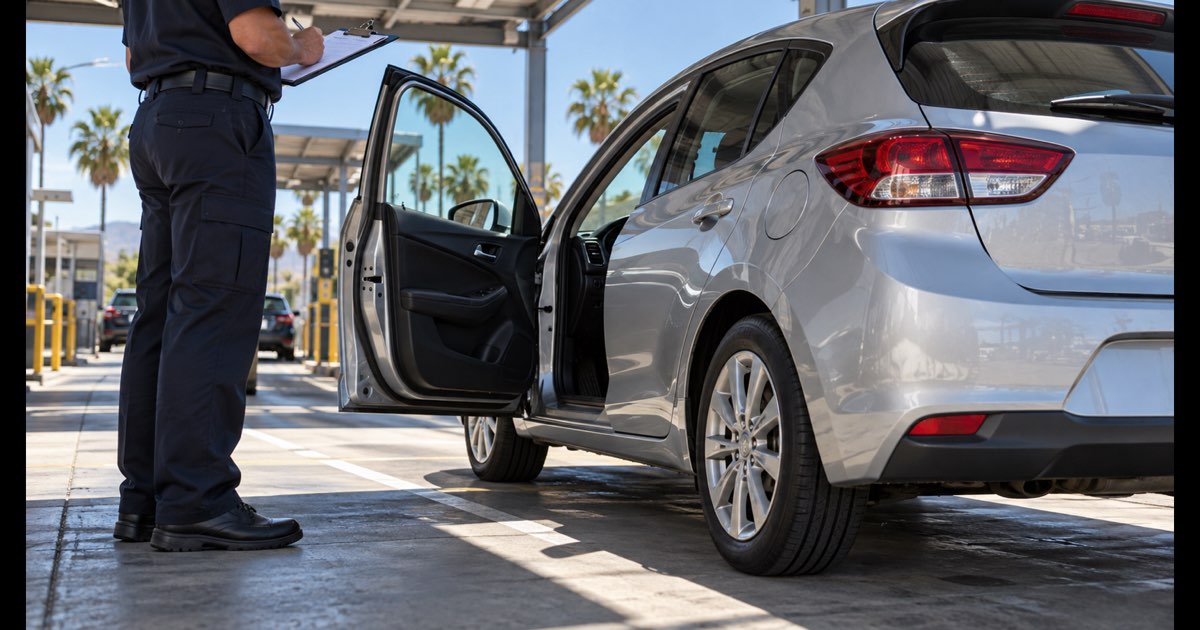
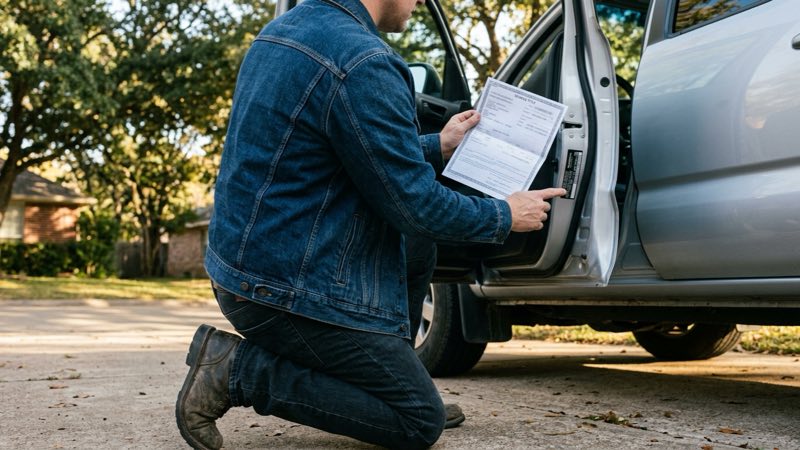
A Texas VIN inspection is no longer a separate trip for most drivers: since January 1, 2025, owners of non-commercial vehicles coming from another state that do not need an emissions inspection certify the VIN themselves by checking a box on Form 130-U, the Application for Texas Title and/or Registration. A physical inspection still applies when the vehicle needs a state emissions or commercial safety inspection, and a law enforcement inspection on Form VTR-68-A is required for vehicles bought outside the United States.
That change came from House Bill 3297, which ended the safety inspection program for non-commercial vehicles. The old Vehicle Inspection Report used to double as the VIN check, and the standalone self-certification form, VTR-270, is now obsolete.
This guide covers which method applies to your vehicle, who can sign a VTR-68-A, what to bring to the county tax office, and the title checks to run before you buy. The rules come from TxDMV's own pages and its Registration and Title Bulletin 005-24, sent to county tax offices and dealers in December 2024.
What a Texas VIN inspection is now
The bulletin is direct about the rule: "VIN certification remains required for vehicles last titled or registered out of state or country." What changed is who does it. TxDMV now recognizes two methods for vehicles from another state:
- Inspection station verification. When a vehicle gets a state inspection, the inspector records the VIN, and the county confirms it in the inspection database. If the county cannot find it there, a copy of the Vehicle Inspection Report or a mytxcar.org printout works as proof.
- Self-certification. Everyone else checks a box on the revised Form 130-U. The current form (Rev 05/26) has the line "I have physically inspected the vehicle described and verified the vehicle identification number above."
A third path, Form VTR-68-A, applies to imported vehicles and is covered below.
Self-certification is not a formality. The form's certification section warns that state law makes falsifying information a third degree felony. Read the VIN on the vehicle itself, not just the out-of-state title, and make sure they match before you sign. If you are not sure where to look, our guide to where the VIN number is covers the dashboard plate, door jamb label and frame stamps.
Compare that with two other large states: California has a licensed verifier or officer complete a REG 31 verification, and Florida requires a third party such as a notary or dealer to sign its HSMV 82042 VIN check.
What changed on January 1, 2025
Before 2025, the safety inspection's Vehicle Inspection Report served as the VIN verification, and owners of exempt or out-of-state vehicles filed Form VTR-270 instead. Here is what TxDMV's bulletin changed:
| Item | Before January 1, 2025 | From January 1, 2025 |
|---|---|---|
| Safety inspection, non-commercial vehicles | Required, with some exemptions | Eliminated |
| Safety inspection, commercial vehicles | Required | Still required |
| Emissions inspection in 17 counties | Required | Still required for previously registered gas-powered vehicles; new vehicles are exempt for their first two years |
| VIN proof when no inspection applies | Form VTR-270 | Checkbox on Form 130-U |
| Form VTR-270 | Current | Obsolete, accepted only for vehicles sold or purchased before 2025 |
| "VIN CERTIFICATION WAIVED" record remark | Added when VTR-270 was used | No longer applied, removed at the next titling event |
| Inspection Replacement Fee | None | $7.50 a year, or $16.75 for a new vehicle's first two-year registration |
If an older guide sent you looking for VTR-270, that is why. The retired form covered vehicles that were exempt from inspection, located out of state or not going to be driven on Texas roads. Those cases now go through Form 130-U.
Which VIN verification your vehicle needs
Use this table to find your path. The emissions counties are Brazoria, Collin, Dallas, Denton, El Paso, Ellis, Fort Bend, Galveston, Harris, Johnson, Kaufman, Montgomery, Parker, Rockwall, Tarrant, Travis and Williamson.
| Your situation | How the VIN is certified | Proof the county looks for |
|---|---|---|
| Previously registered gas-powered, non-commercial vehicle from another state, registered in an emissions county | Emissions inspection at a DPS-certified station | Inspection database record, or the Vehicle Inspection Report |
| Non-commercial vehicle from another state, registered outside the emissions counties | Owner self-certifies | VIN checkbox on Form 130-U |
| Vehicle not otherwise required to get an emissions inspection | Owner self-certifies | VIN checkbox on Form 130-U |
| Commercial vehicle from another state | Safety inspection at a certified station | Inspection database record, or the Vehicle Inspection Report |
| Vehicle purchased outside the United States | Law enforcement VIN inspection | Form VTR-68-A signed by the investigator |
| Vehicle sold or purchased before January 1, 2025 | Legacy forms still accepted | Form VTR-270, if you already have one |
The bulletin limits the emissions inspection to gas-powered vehicles, so a vehicle that falls outside it, even in Harris or Dallas County, takes the self-certification path. TxDMV's "New to Texas" page adds that active duty members of the US Armed Forces and non-resident full-time students at a Texas college or university do not have to register or title their vehicles in Texas.
Is there an out-of-state vehicle inspection form?
Not anymore, as a standalone form. People searching for a Texas "out of state vehicle inspection form" are usually remembering VTR-270, or a Vehicle Inspection Report from the old safety inspection. Today the paperwork depends on which path your vehicle takes:
| Form | What it is | Who signs it | When you need it |
|---|---|---|---|
| Form 130-U | Application for Texas Title and/or Registration, with the VIN self-certification checkbox | The owner | Every out-of-state vehicle; tick the VIN box if no inspection applies |
| Vehicle Inspection Report | Proof of an emissions or commercial safety inspection | The certified inspection station | Gas-powered vehicles in the 17 emissions counties and commercial vehicles, if the county cannot find the record in the database |
| Form VTR-68-A | Law Enforcement Identification Number Inspection | A trained auto theft investigator or authorized NICB employee | Vehicles bought outside the US, and vehicles that need a VIN assigned, such as homemade trailers |
| Form VTR-270 | The old VIN certification form | The owner | Obsolete; accepted only for vehicles sold or purchased before January 1, 2025 |
For most passenger cars, SUVs and pickups moving to Texas from another state, that means one form: the 130-U.
What about Texas DPS? The Department of Public Safety licenses and regulates the inspection stations, but it does not run a consumer VIN check. If you want to see a vehicle's Texas inspection history, the Texas Commission on Environmental Quality runs mytxcar.org, which gives public access to vehicle inspection histories. That is the same record a county can print as proof of inspection.
Form VTR-68-A for vehicles from outside the US
The one case where Texas still sends you to a police investigator is a vehicle bought outside the United States. TxDMV's out-of-state and imported vehicles page lists the steps:
- Import the vehicle properly. It must meet the Federal Motor Vehicle Safety Standards set by NHTSA, and clear US Customs and Border Protection.
- Get any applicable state inspection, such as an emissions inspection in one of the 17 counties or a safety inspection for a commercial vehicle.
- Get the VIN inspection. It must be done by "a trained auto theft investigator who is a law enforcement officer of this state or a political subdivision of this state." TxDMV suggests contacting local law enforcement, or a Motor Vehicle Crime Prevention Authority grantee, to find one. An authorized employee of the National Insurance Crime Bureau may also perform it. You get an original Law Enforcement Identification Number Inspection, Form VTR-68-A, signed by the investigator.
- Apply at the county tax office with the customs and federal compliance documents (such as DOT Form HS-7), a bond release letter if the vehicle was under bond, the Vehicle Inspection Report if applicable, the completed VTR-68-A, Form 130-U, the odometer reading if required, proof of insurance and the ownership document. Anything not in English needs a certified English translation.
TxDMV notes that US military personnel and their immediate family members returning to Texas military bases do not have to submit a VTR-68-A. TxDMV's foreign-vehicle page says the investigator provides the original signed VTR-68-A and does not list an inspection fee, so ask the inspecting agency about any charge.
Before you book that appointment, decode the VIN with our free VIN decoder to confirm the year, make and model match the import paperwork.
Trailers and homemade trailers
Trailers follow their own rules in Texas, and the VIN step is where most homemade trailer applications stall. From TxDMV's trailer page:
- Title threshold. "If your manufactured trailer's gross weight exceeds 4,000 lbs., it must be titled." Titling is optional for newly assembled trailers with a gross weight of 4,000 pounds or less.
- Out-of-state trailers. TxDMV says assembled trailers with a non-titled record in Texas, or a registration receipt from another state, may continue to be non-titled.
- Homemade trailers need a VIN. TxDMV calls these assembled trailers, built by a hobbyist, and says newly assembled trailers are required to have a VIN. An auto theft law enforcement officer must inspect the trailer first.
The VIN assignment process applies when "a permanent identification number was never assigned to a vehicle," which covers a trailer you built yourself:
- Get a Form VTR-68-A inspection. TxDMV says to find an authorized inspector by contacting a Motor Vehicle Crime Prevention Authority grantee or a TxDMV Regional Service Center.
- Gather ownership evidence. For a newly built trailer that is being titled, that is Form VTR-141, the Trailer Verification Statement of Fact. If ownership cannot be established, TxDMV may require a court order.
- Apply at a TxDMV Regional Service Center with the VTR-68-A, the ownership evidence, a photo of the vehicle and the $2.00 fee.
- Receive Form VTR-68-N, the Notice of Assigned or Reassigned Identification Number.
- Title and register at the county tax office with Form 130-U and the rest of your documents.
Texas trailer VIN lookup. A factory-built trailer's 17-character VIN can be decoded like any other; paste it into our VIN decoder to confirm the manufacturer and model year. A state-assigned VIN on a homemade trailer will not decode, because no manufacturer filed decoding data for it. For theft and title history, the same NMVTIS and NICB checks below apply to trailers.
Titling an out-of-state vehicle in Texas, step by step
This is the order that works for most people moving to Texas or buying a vehicle in another state.
- Watch the deadlines. TxDMV says new residents have 30 days from the time they move to register their vehicle. If you bought the vehicle, it must be titled in your name within 30 days of the date of sale to avoid delinquent transfer penalties, and registered within 30 days of bringing it to Texas.
- Get insurance that meets Texas minimums: $30,000 per injured person, up to $60,000 per accident for injuries, and $25,000 for property damage. If your policy was issued in another state, bring the declarations page; the insurer must be authorized to write liability coverage in Texas.
- Get the applicable inspection. Emissions for gas-powered vehicles in the 17 counties, safety for commercial vehicles. If none applies, skip to the next step.
- Check the VIN yourself. Compare the VIN on the vehicle to the title. Run it through our VIN decoder and, for a US-market vehicle, confirm that the 10th character matches the model year on the title with our VIN year chart.
- Complete Form 130-U. If no inspection applied, check the VIN certification box.
- Take everything to your county tax assessor-collector's office: the original out-of-state title or other valid ownership evidence, proof of insurance, the Vehicle Inspection Report if applicable, the odometer reading if required, and proof of sales tax payment or a current foreign or military ownership document.
- Pay the fees. TxDMV's out-of-state page lists a $50.75 base registration fee for passenger vehicles and light trucks, a title application fee of $28 or $33 depending on the county, local county fees of up to $31.50, a $1 insurance verification fee, a $4.75 processing and handling fee and the 6.25% vehicle sales tax. The bulletin adds an Inspection Replacement Fee: $7.50 a year for a previously registered vehicle, or $16.75 at first registration for a new vehicle never registered in Texas or another state. Previously registered gas-powered vehicles in emissions counties also pay a $2.75 Emissions Inspection Fee. For new residents, the "New to Texas" page says the sales tax-related fee can be $90 or the difference between your previous state's sales tax and Texas's.
Common problems and how to avoid them
- The VIN on the vehicle does not match the title. Do not check the self-certification box. You would be certifying something false on a form where falsification is a felony. Sort out the mismatch with the seller or the issuing state first.
- The vehicle is still in another state. Under the old rules, VTR-270 covered this. Now you self-certify on Form 130-U, so you or another owner need to have physically seen the VIN on the vehicle.
- An unrecovered stolen vehicle. Form 130-U has a separate checkbox for an owner who cannot verify the VIN because the vehicle is unrecovered stolen.
- A title brand from another state. If TxDMV sends you a letter about a brand you think is wrong, its title check page says to get a written statement on official letterhead from the state that reported it and mail it to TxDMV's Vehicle Titles and Registration Division.
- A gray market import. TxDMV defines a gray market vehicle as one built for use outside the US that does not comply with federal standards. It cannot be registered or titled in Texas.
Title checks before you buy a Texas car
A VIN certification only confirms the vehicle matches its paperwork. It says nothing about theft, flood damage or a salvage history. Texas does not run its own free title lookup. Here is what is available, and what it costs:
| Check | What it tells you | Cost |
|---|---|---|
| TxDMV title check | NMVTIS title history from states across the country, including junk, salvage and insurance total-loss records | TxDMV says prices begin at a couple of dollars |
| Form VTR-275 | The Texas motor vehicle record itself | $5.75 title history, $6.75 certified, $2.30 title and registration verification |
| NICB VINCheck | Unrecovered theft and salvage records reported by participating insurers | Free |
| NHTSA recall lookup | Open safety recalls on that VIN | Free |
| Our VIN decoder | Year, make, model, engine and plant | Free |
For the TxDMV title check, you pick a provider approved by the US Department of Justice. TxDMV points out that consumers cannot get NMVTIS reports from Carfax, CVR, DMVDesk or Experian, because those four serve only dealers. Our comparison of Carfax and NMVTIS reports explains what each one covers. The full provider list is on the NMVTIS consumer site.
Form VTR-275 is a mail or in-person request to TxDMV. Because of the Driver Privacy Protection Act, you need a copy of your photo ID, plus written authorization or a permitted use if you are not the owner or lienholder. Payment is by check, money order or cashier's check, and fees are not refundable. Our guide to DMV VIN lookups explains what state records will and will not show a buyer.
Frequently asked questions
Do I need a VIN inspection to register an out-of-state car in Texas?
You need a VIN certification, but for most passenger vehicles that is now a self-certification. Since January 1, 2025, owners who do not need a state inspection check the VIN certification box on Form 130-U. Previously registered gas-powered vehicles in the 17 emissions counties and commercial vehicles get it through their state inspection instead.
Is Form VTR-270 still used in Texas?
No. TxDMV's Registration and Title Bulletin 005-24 declared the Vehicle Identification Number Certification (Form VTR-270) obsolete as of January 1, 2025. Counties may still accept it for vehicles sold or purchased before that date. Everyone else self-certifies on the revised Form 130-U.
Who can sign Form VTR-68-A?
A trained auto theft investigator who is a law enforcement officer of Texas or a Texas political subdivision, or an authorized employee of the National Insurance Crime Bureau. TxDMV requires this inspection for vehicles purchased outside the United States.
How long do I have to register my car after moving to Texas?
TxDMV says you have 30 days from the time you move to Texas to register your vehicle. If you bought the vehicle, it also has to be titled in your name within 30 days of the sale date to avoid delinquent transfer penalties.
Does Texas have a free VIN title check?
Not directly. TxDMV's title check sends you to NMVTIS providers whose reports start at a couple of dollars, and Form VTR-275 costs $5.75 for a title history. For free checks, use NICB VINCheck for theft and salvage records and NHTSA's recall lookup.
Is there an out-of-state vehicle inspection form in Texas?
Not as a standalone form anymore. Most owners certify the VIN with a checkbox on Form 130-U. Vehicles that need an emissions or commercial safety inspection use the inspection record instead, and vehicles bought outside the US need a law enforcement inspection on Form VTR-68-A.
How do I get a VIN for a homemade trailer in Texas?
Get a law enforcement inspection on Form VTR-68-A, then apply at a TxDMV Regional Service Center with ownership evidence, a photo of the trailer and the $2.00 fee. TxDMV issues Form VTR-68-N with the assigned number, and you title it at the county tax office. Newly built trailers being titled also need Form VTR-141.
Sources & official references
- TxDMV Registration and Title Bulletin 005-24: HB 3297, Elimination of Vehicle Safety Inspectionscontent.govdelivery.com
VIN certification methods from January 1, 2025, VTR-270 made obsolete, inspection replacement and emissions fees
- TxDMV: Out of State and Imported Vehiclestxdmv.gov
Documents and fees for out-of-state vehicles, VTR-68-A inspection for vehicles bought outside the US
- TxDMV: New to Texastxdmv.gov
30-day registration rule, emissions counties, new-resident sales tax
- TxDMV: Register Your Vehicletxdmv.gov
Safety inspections no longer required for non-commercial vehicles
- TxDMV Form 130-U: Application for Texas Title and/or Registrationtxdmv.gov
Current form (Rev 05/26) with the VIN self-certification checkbox
- TxDMV Form VTR-270: Vehicle Identification Number Certification (Harris County copy)hctax.net
The retired self-certification form, Rev 8/16, for vehicles sold before 2025
- TxDMV: Title Check, Look Before You Buytxdmv.gov
NMVTIS title check through approved providers and title brand definitions
- TxDMV Form VTR-275: Request for Texas Motor Vehicle Informationtxdmv.gov
Fees for title history and record verification
- TxDMV: Trailerstxdmv.gov
4,000 lb title threshold, assembled trailer VIN and inspection rules
- TxDMV: VIN Assignment / Reassignment Processtxdmv.gov
VTR-68-A inspection, VTR-68-N notice and the $2.00 Regional Service Center fee
- TCEQ: My TX Car vehicle inspection historymytxcar.org
Public access to Texas vehicle inspection histories
- NMVTIS: Vehicle history for consumersvehiclehistory.bja.ojp.gov
Full list of approved NMVTIS report providers
- NICB: Terms of Use for VINChecknicb.org
Free theft and salvage lookup offered as a public service