Pre-Delivery Inspection for New Cars: PDI Checklist
Use this new-car PDI checklist in India to verify VIN, manufacturing date, tyres, battery, paint, glass and documents before registration and delivery.

Co-Founder & COO
Ambika brings 12 years of project management and technical operations experience. She runs the publishing workflow at vindecode.pro, from research and source checks to review and publication, and keeps our guides accurate and up to date as official rules change.
A new-car PDI should happen after the dealer assigns a VIN and before it registers that vehicle in your name. Check the chassis number and manufacturing-date documents first, then inspect paint, tyres, battery, glass, cabin and functions in daylight.
Use the VIN decoder home to keep an accurate copy of the identifier and the manufacturing-date page for a cross-check. Your decisive evidence at delivery is still the physical car, Form 22 and the signed documents.
Book the PDI Before Registration
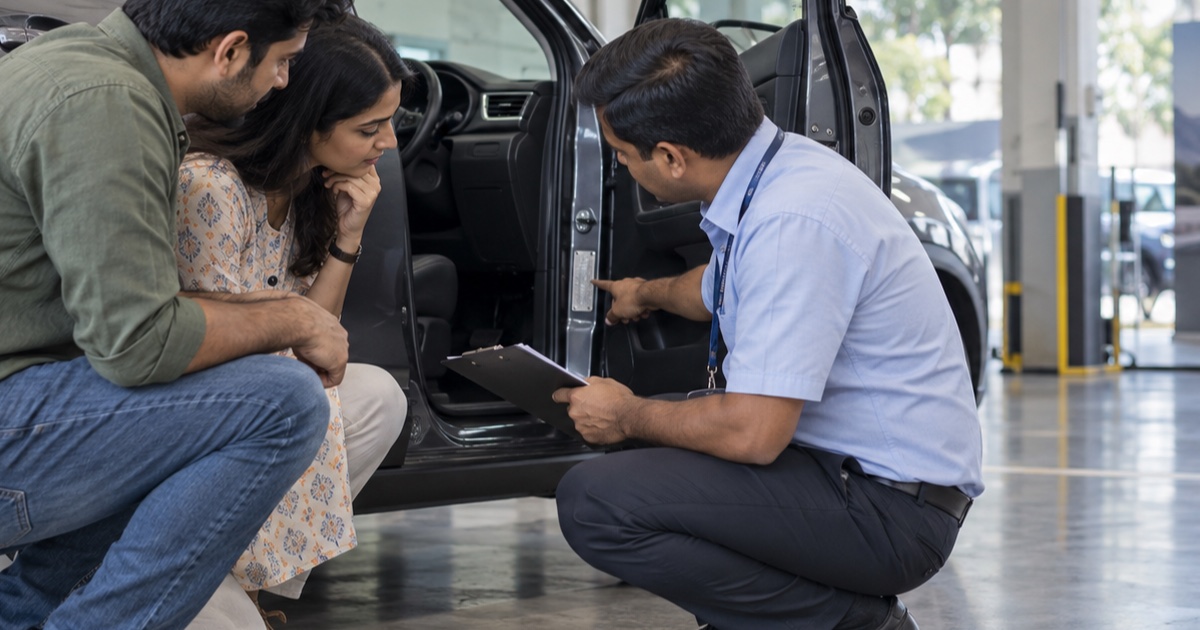
Tell the sales adviser in writing that you want a pre-registration inspection of the allocated vehicle. Ask for the VIN, stockyard location, a daylight appointment, keys, Form 22, allotment sheet and a draft invoice. If the dealer has only a showroom display car available, wait for the actual allocated chassis number rather than inspecting a similar vehicle.
Bring a phone with enough storage, a small torch, paper checklist and a tyre-pressure gauge if you know how to use one. Avoid taking tools that could scratch trim or touch high-voltage equipment. A second person helps: one reads the VIN while the other compares it to paper, and one can operate controls while the other watches lamps.
Start before accessories, ceramic coating or number plates hide condition clues. Ask whether any repair, paintwork, tyre change, battery charge, transit damage or demonstration use has occurred. A clean answer can be recorded. An evasive one tells you to inspect more closely.
Check VIN and Manufacturing Date First
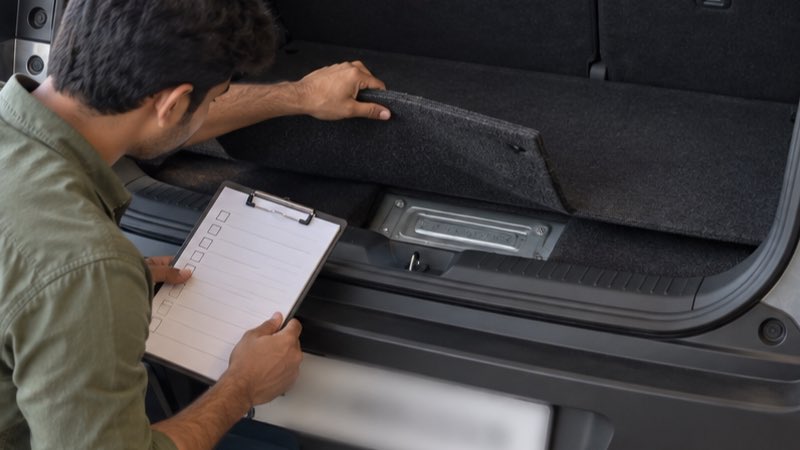
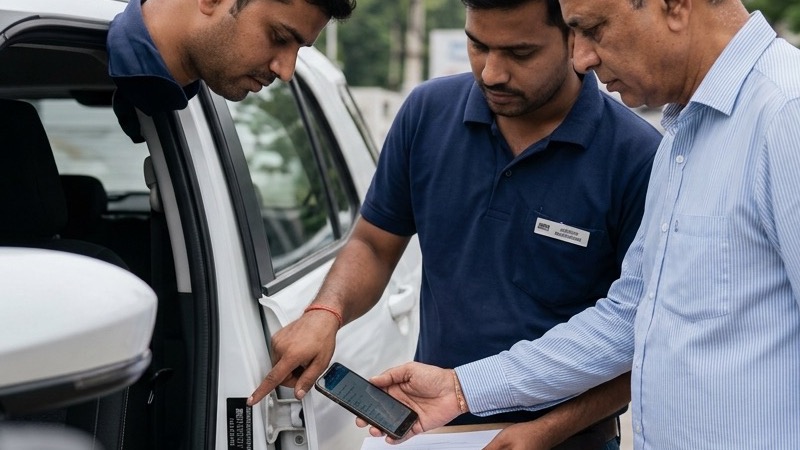
Photograph the stamped chassis number in its location, then copy all 17 characters. The Bureau of Indian Standards describes the VIN as three WMI characters, six descriptor characters and eight identifier characters. Count from the first VIN character, not from decorative stars or borders. Compare it with the dealer's allotment and the Chassis number on Form 22.
Form 22 is the manufacturer-issued road-worthiness certificate prescribed with the vehicle. It includes identifying fields such as model or commercial name, chassis number and engine or motor number. Ask which record states the manufacturing month and year. Do not rely on an unsourced maker-specific letter table to settle a mismatch.
After registration, the RC format includes Date of Manufacture (In mm-yyyy) and Chassis Number. This is useful for later checking through the official RC check page, but it is not a reason to skip the earlier inspection. The car manufacturing-date guide covers the document sequence in more depth.
Daylight Walkaround: Paint, Glass and Wheels
Walk slowly around the car with paint and glass clean enough to inspect. Look along each panel at a shallow angle for sanding marks, overspray, different orange-peel texture, dents, poor panel gaps, broken clips or paint film cut at an odd edge. Open every door, bonnet and tailgate. Check seals, hinges, shut lines and visible drain channels.
Check windscreens, windows, lamps and mirrors for chips, scratches, water marks or replacement clues. Photograph wheel rims, tyres and the spare. Read the four-digit DOT week-year mark on every tyre including the spare: it identifies the tyre's production week and year, not the car's build date. Ask for an explanation if a tyre is damaged, substantially older than the car's story, or differs from the booked specification.
| Item | Inspect | Record |
|---|---|---|
| Paint | Texture, dents, overspray, panel gaps | Wide and close daylight photos |
| Glass and lamps | Chips, scratches, moisture and operation | Photos before cleaning or repair |
| Tyres and spare | DOT marking, sidewalls, rims and specification | Photo of each sidewall and spare |
| Underbody visible areas | Transit scrapes, leaks and hanging covers | Ask for lift inspection if concerned |
Cabin, Electrical and Mechanical Checks
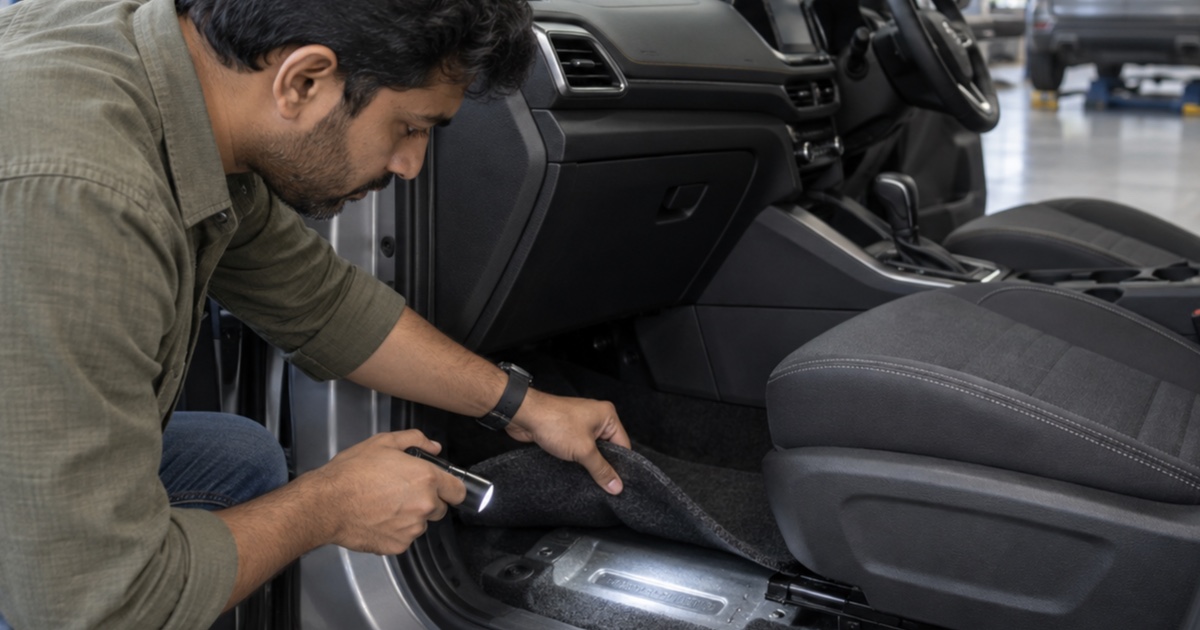
Sit in every seat. Check upholstery, headliner, seat adjustment, belts, trim fasteners, glovebox, boot, spare-wheel well, toolkit and both keys. Test the features listed on your booking: windows, locks, mirrors, lights, horn, wipers, washer, camera, parking sensors, infotainment, air conditioning and charging ports. Pair a phone only if you are comfortable removing it later.
Start the engine or power the vehicle on as the manual instructs. Observe the cluster during its self-check and note any warning lamp that remains on. Do not accept a claim that a warning will disappear after a “software update” without a written job card. Photograph the odometer. There is no official universal kilometre limit for a new-car delivery, so ask the dealer to explain any figure in writing as transport, testing, demonstration or other use.
If the car has been standing in dealer stock, ask for a battery health test and written report. Check fluid reservoirs visually only where the owner's manual permits. Do not open sealed caps, disconnect terminals or work around an EV's high-voltage components.
Documents, Photos and What to Do When a Check Fails
Create a delivery folder: allocation sheet, VIN photos, Form 22, PDI photos, invoice draft, warranty terms, tyre images, battery report and any signed work order. Photograph the odometer and all sides of the car at handover. A short, dated record is more useful than a long argument after the car leaves the bay.
| Failure | Practical next step before registration |
|---|---|
| VIN differs on car and Form 22 | Pause. Photograph both, ask for corrected paperwork or another allocation, and do not sign a later-correction promise. |
| Date is older than expected | Ask about storage, inspect condition-sensitive parts, and negotiate documented terms only after the car passes PDI. |
| Paint or tyre defect | Put the exact repair or replacement on a signed job card and reinspect it. |
| Warning lamp or function fails | Ask for diagnosis and a completed repair before delivery, not a verbal assurance. |
| Dealer will not permit inspection | Escalate to the dealership manager and consider a different allocation before registration. |
An older build date is not automatically a rejection. It does make your documentation and condition check more important. Read how to assess an older-stock new car before choosing a discount, accessory pack or replacement allocation. Keep the manufacturer date process separate from the vehicle's model-year code in the VIN year chart.
For a useful final sweep, sit in the driver's seat and operate the car as you will on day one: adjust the seat and mirrors, connect a phone if that feature was sold to you, set the air conditioning, test reverse camera and sensors, and verify both key fobs. Then move to the rear seats and boot. Check child-seat anchors where fitted, seat folding, boot lamp, parcel shelf, charging points and spare-wheel well. This catches omissions that a walkaround misses.
Ask the dealer to explain which papers are provisional and which will be issued at handover. The folder should identify the final VIN, invoice, insurance, warranty, keys and accessories. If a feature is missing because of a supply change, obtain the model-specific written commitment before signing. Do not rely on a brochure photo or verbal statement when the delivery car is different.
Finally, photograph the car after the wash but before it leaves the dealership. Take one image of each side, each corner, roof, windscreen, wheels, odometer and VIN location. Share the folder with the co-buyer or family member who helped inspect. That record is simple, private and useful if a delivery issue is raised later.
Frequently asked questions
When should I do a new-car PDI?
Arrange it after the dealer allocates a VIN but before registration and final delivery documents are completed, so discrepancies can be addressed while another allocation remains possible.
What document confirms the manufacturing date?
Match the manufacturer Form 22 to the stamped VIN before registration. After registration, verify the RC field called Date of Manufacture in mm-yyyy.
What odometer reading is acceptable on a new car?
There is no universal official threshold. Photograph the reading and request a written explanation for use consistent with transport, testing or demonstration history.
Can I reject a car at PDI?
Your contract and dealer policy govern remedies. Before registration, record the issue and ask the dealer for a repair, replacement allocation or other written solution.
Sources & official references
- MoRTH Form 22 notificationmorth.nic.in
Prescribes the road-worthiness certificate issued with the vehicle.
- Parivahan Form 23A certificate of registrationparivahan.gov.in
Lists Date of Manufacture and Chassis Number on the prescribed RC.
- Bureau of Indian Standards: World Manufacturer Identifierbis.gov.in
Explains the standard 17-character VIN sections.
- Parivahan licence and registration detailsparivahan.gov.in
Official vehicle-registration services portal.