New Car With Old Manufacturing Date: Buyer Guide
Buying a new car with an old manufacturing date? Check documents, tyres, battery, paint and warranty before negotiating price or accepting dealer stock.

Co-Founder & CTO
Saurabh is a technology specialist with deep expertise in AI, full-stack development and scalable platform architecture. He built vindecode.pro from the ground up, including the decoder itself: VIN and chassis number rules, maker-specific conventions and the NHTSA vPIC integration. He leads product development and technical strategy, and writes our guides on how VINs work.
A new car with an old manufacturing date can still be a sound purchase if its identity, paperwork and condition check out, and the price reflects what you are accepting. Establish the real manufacturing date first, then inspect the car before registration and put every agreed remedy in writing.
Use the manufacturing-date page and VIN decoder home to preserve the full chassis number, but rely on Form 22 and the RC's Date of Manufacture field for the recorded month and year.
Establish the Date Before Discussing a Discount
Ask the dealer for the allocated VIN, Form 22 and a draft invoice. Photograph the chassis stamp and compare it character by character with the Chassis number on Form 22. If the car is already registered, the prescribed RC format includes both Registration Date and Date of Manufacture (In mm-yyyy). They should not be treated as interchangeable.
The date tells you when to ask questions, not whether to reject a car automatically. A unit built several months ago may have been indoors, started and maintained on schedule. A newly built unit may have suffered a transport scrape. That is why the pre-delivery inspection checklist is more useful than a blanket age rule.
Ask the adviser: Where was the vehicle stored? Was it a display or test-drive car? Has any body repair, tyre replacement, battery recharge or accessory fitting been done? Request a written answer for anything that affects your decision. Do not let a booking deadline turn a document check into a verbal conversation.
Condition Checks for Older Dealer Stock
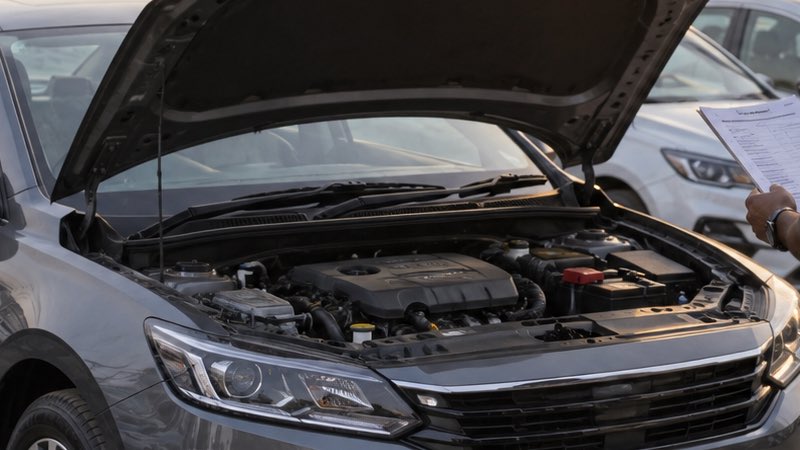
Older stock needs a careful but ordinary PDI. Inspect paint in daylight from several angles for different texture, overspray, sanding marks, uneven panel gaps or broken clips. Open every door, bonnet and tailgate. Check rubber door seals for hardening or tears and inspect the underbody or wheel wells for obvious impact damage.
Check all four tyres and the spare. The four-digit DOT mark gives the week and year of tyre manufacture, not the car's manufacturing date. A tyre date that does not fit the story, cracked sidewall, flat spot or rim damage should be recorded and explained. Start the engine, note any warning lamp that stays on, and ask for a battery test if the car has remained in stock. Test lights, air conditioning, infotainment, windows, cameras, locks and both keys.
| Area | What to look for | Written follow-up |
|---|---|---|
| VIN and documents | Every character matches | Correct document or different allocation |
| Paint and panels | No repair clues or transit damage | Repair scope and inspection before delivery |
| Tyres and spare | DOT code, condition and matching specification | Replacement if damaged or unsuitable |
| Battery and warning lamps | Normal start and no persistent warning | Battery test report or repair order |
| Odometer | Photo of reading and credible explanation | Dealer note for demo or transport use |
Warranty, Invoice and Registration Questions
Ask the manufacturer or authorised dealer to show the written warranty terms for the exact model and explain the warranty start event. Do not assume it begins at manufacture, dispatch, booking or invoice date. Make them state the date and the document that governs it. Keep the warranty booklet, final invoice, delivery note, Form 22 and any promised extended coverage together.
Form 22 is the manufacturer-issued road-worthiness certificate prescribed under the Central Motor Vehicles Rules. It gives you a record tied to the car's chassis number. The RC is the registration record and includes its own date fields. An RC status check is useful once registration has been completed, but it cannot recreate your chance to inspect before registration.
If you are buying a car already registered to someone else, the decision is no longer a new-car delivery negotiation. Check ownership and history separately, and do not accept the phrase “unused” as a substitute for registration and service records.
How to Negotiate or Walk Away
First decide whether the car is acceptable at all. A VIN mismatch, altered-looking identifier, missing Form 22, unrepaired damage or an unexplained warning lamp is a reason to pause, not a reason to ask for floor mats. Tell the dealer which condition must be fixed or which document must be supplied before you will proceed.
If the car passes PDI but its manufacturing date changes its value to you, negotiate a simple written offer. It could be a lower on-road price, an extended warranty, a documented service package, replacement of a condition-sensitive part, or a different allocation. There is no official fixed discount percentage for an older car. Demand a percentage only if you have independently decided that it compensates for the date and condition.

Walk away or request a different car if the dealer will not let you inspect, will not share documents, or tries to register before resolving the mismatch. This is not a legal conclusion about every sales contract; it is a practical way to avoid losing your strongest inspection point.
Create a Delivery-Day Record
Build one folder before handing over the balance: booking and allocation documents, VIN photographs, Form 22, PDI photos, battery report if requested, tyre photos, final invoice, warranty documents and a signed list of pending work. Photograph the odometer and the car from all sides at handover. Back it up before you leave the dealership.
The aim is a clean, explainable record. It also makes future resale discussions easier because you can distinguish manufacturing, invoice and registration dates without guessing. For the VIN and document sequence itself, use how to check a car manufacturing date.
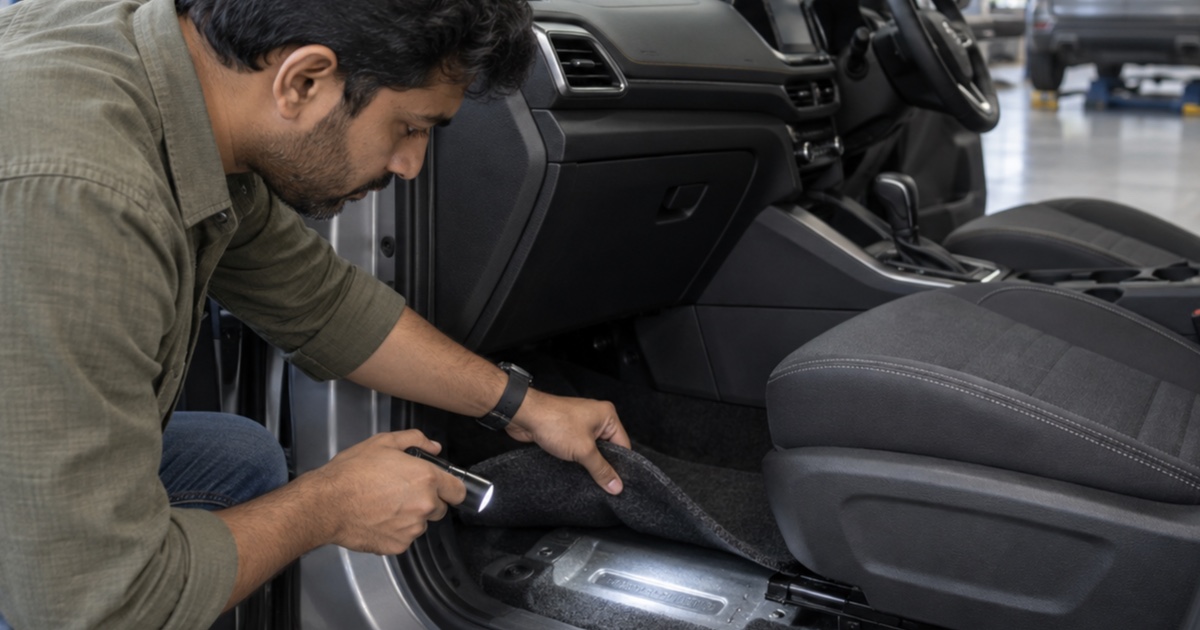
There is one more practical comparison worth making: inspect the car before and after accessory fitting. Floor mats, seat covers, body graphics and a number plate can hide a scratched sill, loose trim or a poor repair. Ask for a clean, unaccessorised inspection where possible. If accessories have already been fitted, photograph the underlying accessible areas and list any limitation on the PDI form.
Keep discount arithmetic separate from financing. A larger exchange bonus or accessory bundle may be presented as a discount, while the cash price, insurance cost, loan rate and extended warranty cost change independently. Ask for an itemised on-road quotation with each concession on its own line. That lets you compare an older unit with another dealer's current allocation without guessing what the offer contains.
If you choose the older car, make a final dated note: VIN checked, documents checked, accepted defects, promised work, warranty start explanation and names of the people responsible. It takes five minutes and is more useful than trying to reconstruct the conversation after delivery.
Bring this note to handover. Ask both parties to initial any final repair or replacement entry before the vehicle leaves the dealership.
Keep it filed safely for future reference.
Frequently asked questions
Is a new car with an old manufacturing date legal to sell?
A manufacturing date alone does not establish that a vehicle cannot be sold. Confirm its paperwork, compliance, condition and the terms offered by the dealer before accepting it.
Does the registration date replace the manufacturing date?
No. The prescribed RC format lists Registration Date and Date of Manufacture as separate fields.
How much discount should I demand on old stock?
There is no official fixed percentage. First resolve document and condition issues, then negotiate a written price or benefit that makes sense for that individual car.
Should I accept accessories instead of a repair?
Only if the car has passed inspection and you value the documented offer. Accessories do not correct a VIN mismatch, damaged tyre or unresolved mechanical warning.
Sources & official references
- MoRTH Form 22 notificationmorth.nic.in
Prescribes the manufacturer road-worthiness certificate.
- Parivahan Form 23A certificate of registrationparivahan.gov.in
Shows separate RC fields for Registration Date and Date of Manufacture.
- Parivahan licence and registration detailsparivahan.gov.in
Official portal for vehicle-registration services.
- DigiLocker FAQ: MoRTH digital RC integrationwb.digilocker.gov.in
Explains fetching a digital RC from the National Register.